

Through my writing, I open doors and shine the light on lived experiences,
one story at a time.
My
writing
I'm the kind of writer who is always listening to other people's conversations. Some of the richest content comes from eavesdropping in the library, on public transit, at parties, when I'm out walking or shopping. I also get ideas from newspaper articles and editorial cartoons. So much of what happens in real life would not be believed if it were fictional.
My writing process
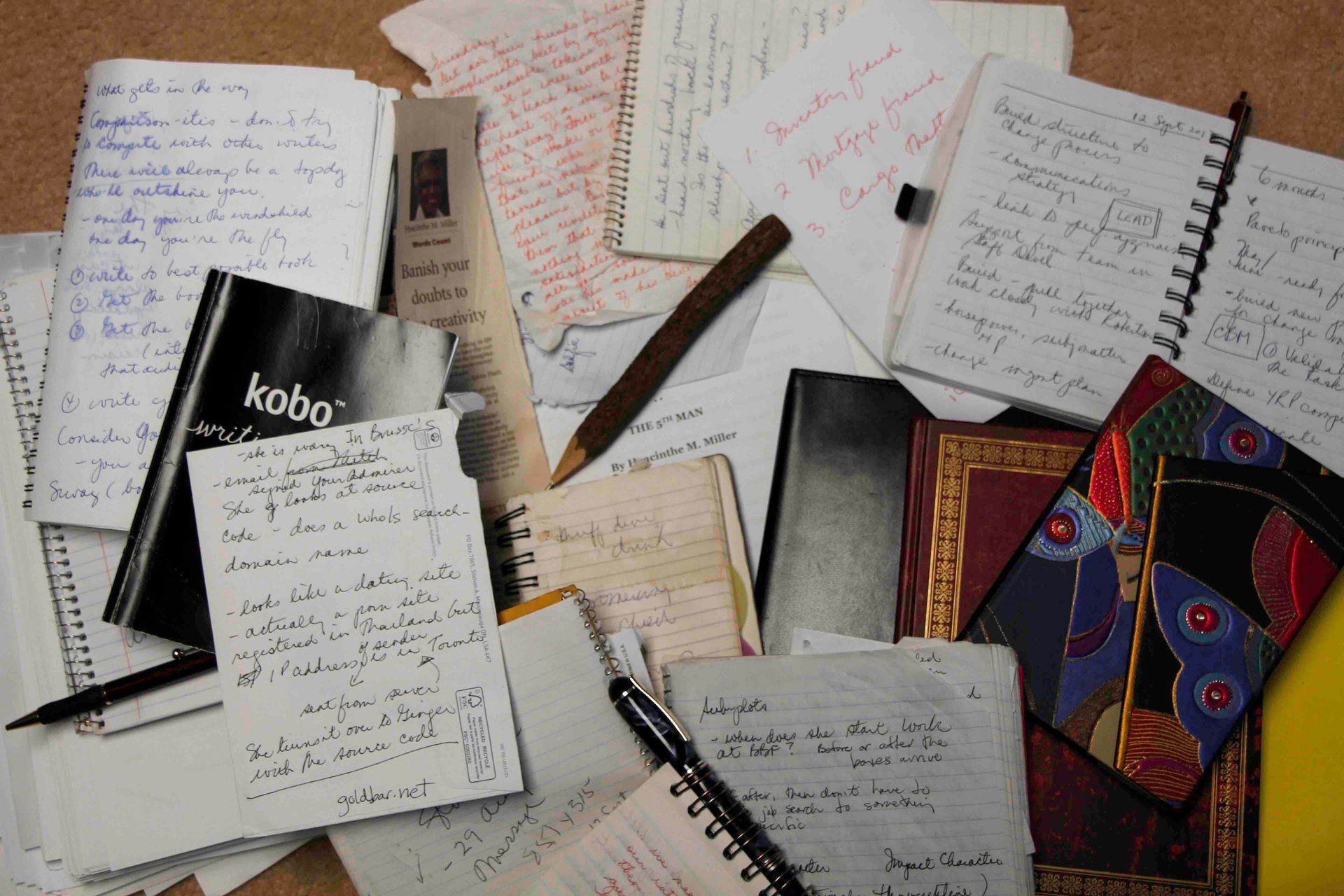
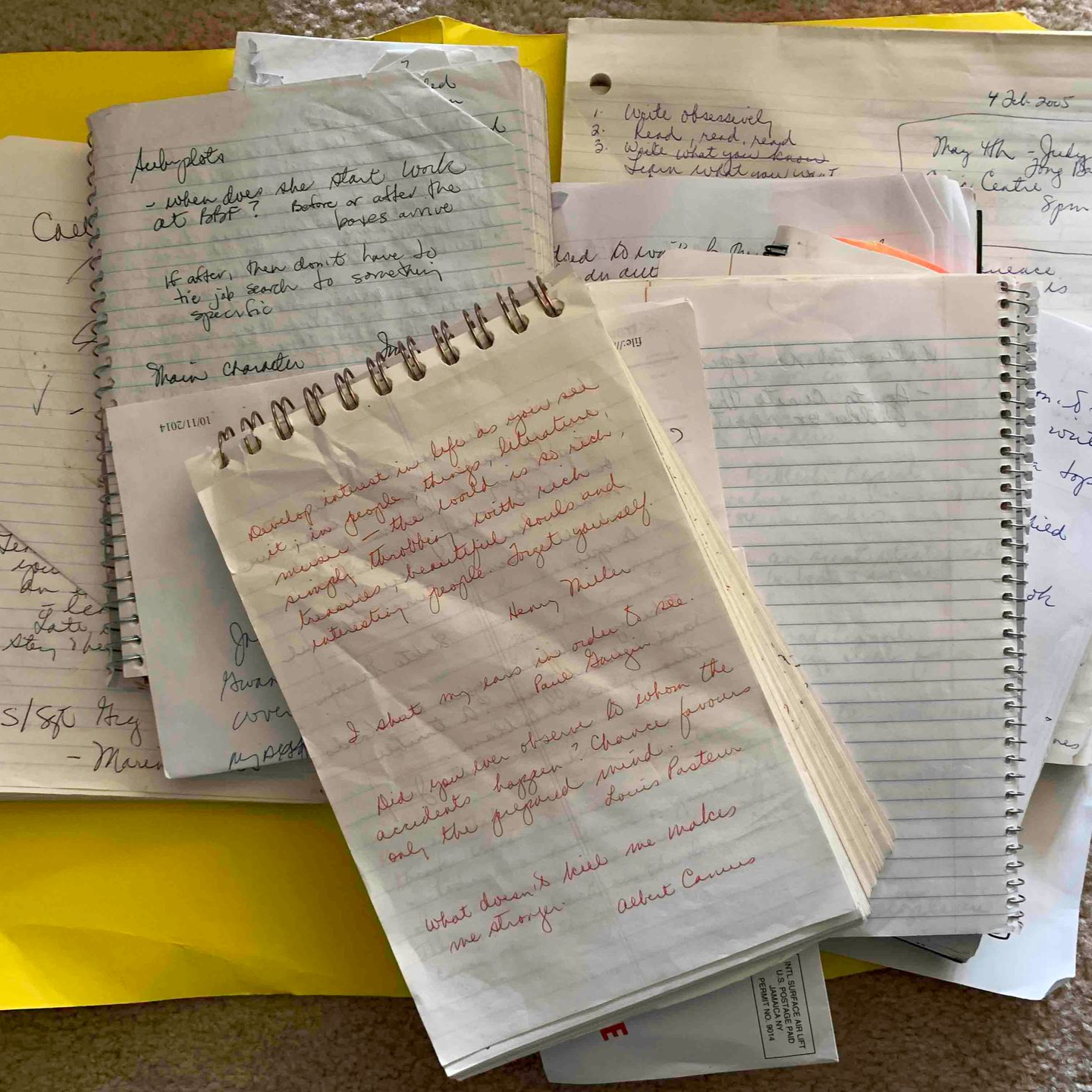
I have dozens of Dollar Store notebooks filled with bits of pieces of writing. I keep a pad of paper and a pencil in my car, so if I get inspired, I'll scribble it down before I forget.
I do lots of research. I talk to people. I observe and take notes. Because I worked as a consultant in the policing sector, I have access to lots of law enforcement stories (good and bad). I read several audiobooks books a week. Thanks to free downloadable library services like Libby and Hoopla, I haven't gone broke.
"When I’m doing my editing and I'm not sure if I've hit the right note or tone, I'll stare at the photo of one of my characters for a while and ask myself, 'Is that what X would say or do?' If not, then I change things."
I started writing my first short bits for Kenora Reinvented over 10 years ago. I love writing and have lots of words. But I'm not disciplined. I envy writers who say they sit down at their keyboard at a certain time every day and work for X number of hours.
I don't usually write in a sequence. I write scenes or chapters when I get a spurt of inspiration. Because of that, I ended up with about eight plot lines, 20 characters and 160,000 words. What really helped was switching from Microsoft Word to Scrivener. Scrivener is a powerful, flexible program designed for writers, and that suits the way I write.
It turned out I had two books, each with a strong central plot line, ready to be written. My characters had lived a long time in my head, and they were impatient for their stories to be told. So I spent a year creating the first and second books in my Kenora & Jake series. The third book is half-imagined, but that’s the fun of the writing game. Thinking up situations that my characters have to find their way out of, tossing them into relationship or work issues that make readers gasp or laugh out loud. And of course, because my mystery novels also feature seasoned romance, there are happy endings.
My writing took a detour when my prospective agent said that he wanted Kenora to be in her mid-twenties and more ‘urban’ and ‘edgy’. Honestly, I don’t remember much from my mid-twenties. Those memories were wiped out by the fatigue of a full life with children, husband, job, volunteer work, sports, entertaining, etc. It took me more than a year to work on what he wanted but, in the process, I lost touch with Kenora, Jake, Bosco and Maggie, and gave up. Another ‘expert’ suggested that writing in third person was what readers wanted. I spent another year converting first person pronouns and making sure the grammar was aligned. That didn’t feel right either, so I went back to what I wanted to write—a first person narrative with middle-aged characters who use their lived experience to problem-solve, swear, have sex and enjoy the finer things in life.
When I'm at my desk, I need visuals to help me stay focused when I'm writing a scene. Taped beside my computer are photos of my main characters. When I’m doing my editing and I'm not sure if I've hit the right note or tone, I'll stare at the photo of one of my characters for a while and ask myself, "Is that what X would say or do?" If not, then I change things.
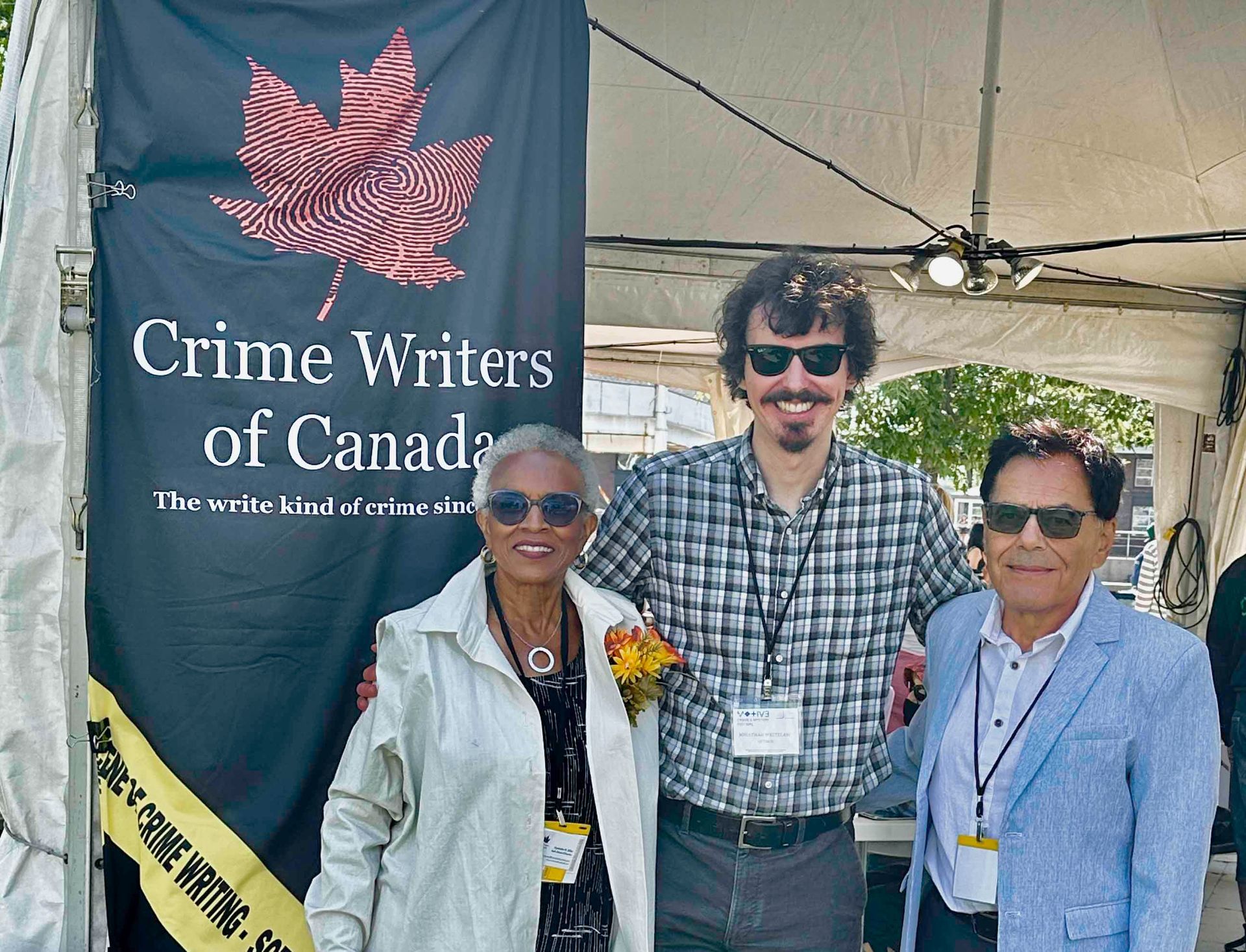
I've attended dozens of workshops and joined professional writers' groups like Crime Writers of Canada, The Writers Union and Toronto Romance Writers. Then, when I finished maybe the fifteenth draft, I sought advice from mentors like Barbara Kyle, whose novels have sold half a million copies. I trusted her judgment. After she finished editing my manuscript, I went through it again from back to front. Then I had my computer read it to me. That robotic voice helped me concentrate on the flow of words. Listening helped me identity too-long sentences, stilted language and repeated words.
Once that was done, I found a cover designer in Australia and after 2 years of back and forth and title changes, we ended up with what I have today. I chose to publish independently in 2019 because frankly, I got tired of waiting for the agent I worked with to understand my book. This year (2025), I had
Kenora Reinvented
re-edited and refreshed the font, images and colour tone of the cover to coordinate with the draft cover of book two.
"Hitting PRINT was terrifying – who isn’t afraid of rejection?"
I used beta readers for book one including my 91-year-old Aunty. When she said she loved my book, I knew I was ready. Hitting PRINT was terrifying – who isn’t afraid of rejection? But I finally did it, and I'm glad Kenora's story is being told.
Now book two is finished and off to my editor, Cindi Jackson. This time, however, the process won't take as long as book one. Although I still have bouts of doubt (what writer doesn’t), I’ve got two book already out in the world. My fears have turned to excitement about sharing Kenora’s, Jake’s, Bosco’s and Maggie’s next adventures.
Kenora reinvented
When a recently divorced, unemployed 42-year-old woman lands a job as a rookie private investigator, she trades her quiet librarian past for late-night stakeouts, fraud investigations, and second-chance romance. *Kenora Reinvented* is a mystery series about grit, reinvention, and the power of starting over—one case, one mistake, and one victory at a time.
"The book explores female resilience, friendship, and late-in-life transformation."
Set in contemporary Toronto, Ontario, *Kenora Reinvented* follows Kenora Tedesco as she rebuilds her life after being dumped by her husband, fired from her job, and forced to choose between playing it safe or finally betting on herself. With sharp wit, stubborn determination, and the reluctant support of her gruff mentor and charming new boss, she navigates small-time crime and big-time personal growth. The book explores female resilience, friendship, and late-in-life transformation. It delivers a cozy mystery experience with snappy dialogue, emotional depth, a dash of danger and spicy romance, and plenty of character-driven charm.
If you enjoyed Mare of Easttown (a flawed female lead and gritty mystery), The Marvelous Mrs. Maisel (late-life reinvention with wit and heart) or Only Murders in the Building (quirky, with a mystery-driven ensemble), you’ll find Kenora Reinvented is a binge-worthy, emotionally satisfying, mystery-driven series featuring a fresh protagonist who speaks to a long-overlooked audience. It’s time to let midlife women take the lead—and the case.
THE
FIFTH MAN
What would you do if, at age 45, you discovered you aren’t who you thought you were? And that the people you'd relied on most had betrayed you?
Three years after her mother died, her husband ditched her for his faith coach and she'd been fired from her middle-management job, Kenora Tedesco thought she’d reinvented herself. But the delivery of two cartons of documents and photos her mother had stashed in an Italian palazzo shatters Kenora’s tidy new existence.
She’s earned the nickname Ms. Intrepid, but success as a private investigator hasn’t prepared her for unwrapping her own emotional baggage.
Kenora’s clandestine investigations into the tangled legacy of family secrets propel her into an international quest for answers. Individuals with vested interests in keeping those old mysteries unsolved threaten her life and her progress. She struggles with who to trust. Danger, doubt, and disappointment are her constant companions.
Is uncovering her truth worth the career and relationship risks she takes? And will that knowledge change anything for the better?
"Danger, doubt, and disappointment are her constant companions. "
You are the change
Future Self journaling is a method of planning where you want to be in one, two- or five-years’ time. It involves self-reflection, then writing or journaling about those reflections. The focus is on creating the future—your future--with recommendations for resources and skill-building exercises to get you there.
Future Self Journaling differs because of the emphasis on planning next steps. Instead of making spreadsheets or tables, you’ll be asked to think about your current beliefs, thoughts and experiences, select the ones that continue to serve your goals for the future, then write them down on the pages of a physical journal or type them into a secure document on your phone, tablet or computer.
Your journal about where you'd like your life to be in the future is what we call a ‘living document’. Over weeks and months, you’ll be able to review what you’ve written and update your goals, based on the progress you’ve made. Along the way, you’l reflect on where you are today and the future you plan to create. Will it be easy? Probably not. But you’ll be following the steps in this short book for you.
"Along the way, you’Ll reflect on where you are today and the future you plan to create."
Using this journal takes you to a no-judgment zone. You’ll observe, but not analyze. You’ll be kind to yourself and over time, feel more comfortable practicing gratitude and self-compassion.
The process isn’t complicated, but it does require a commitment from you to do the work. And when you’re done, you’ll have taken a huge step to creating a future that serves you.