
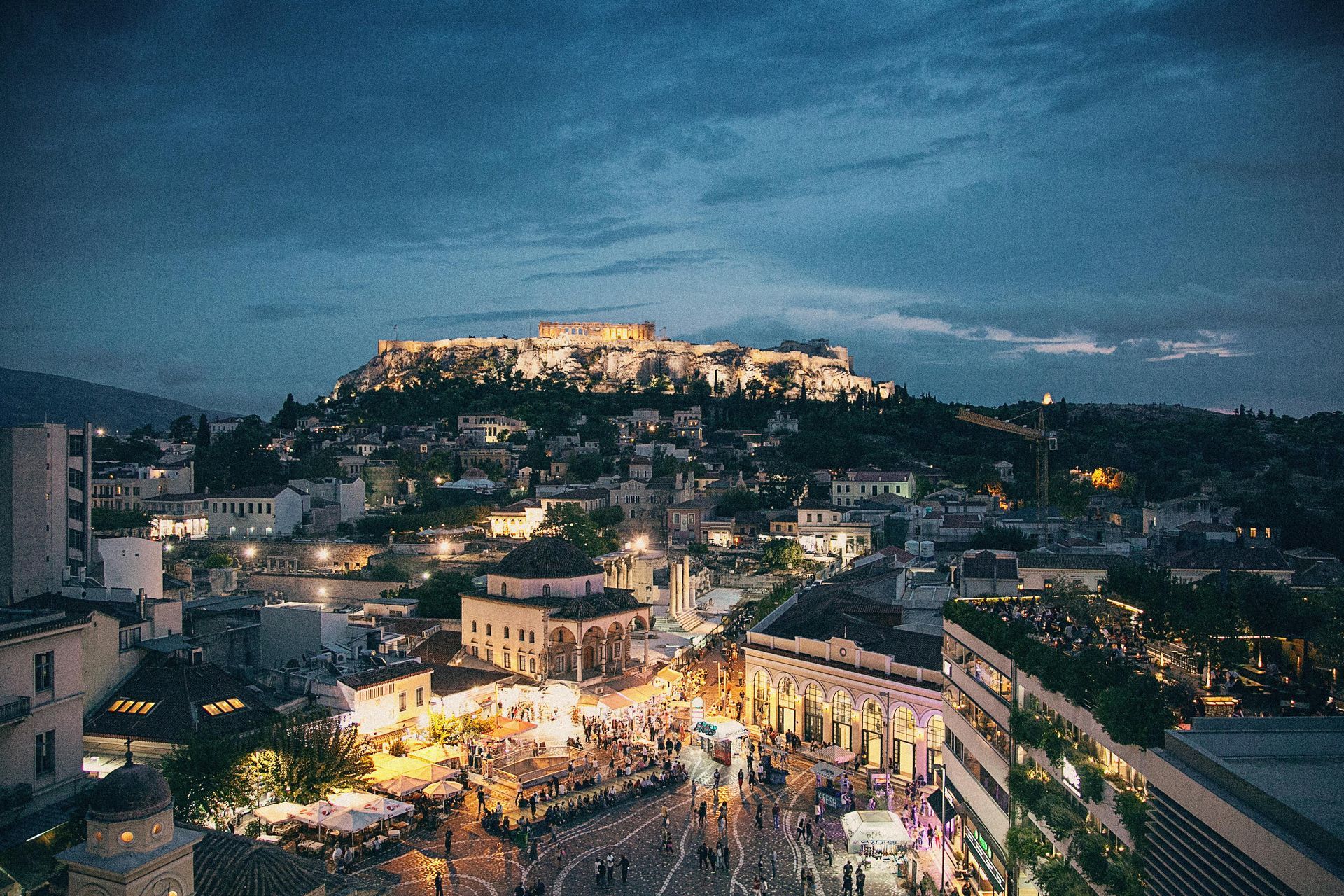
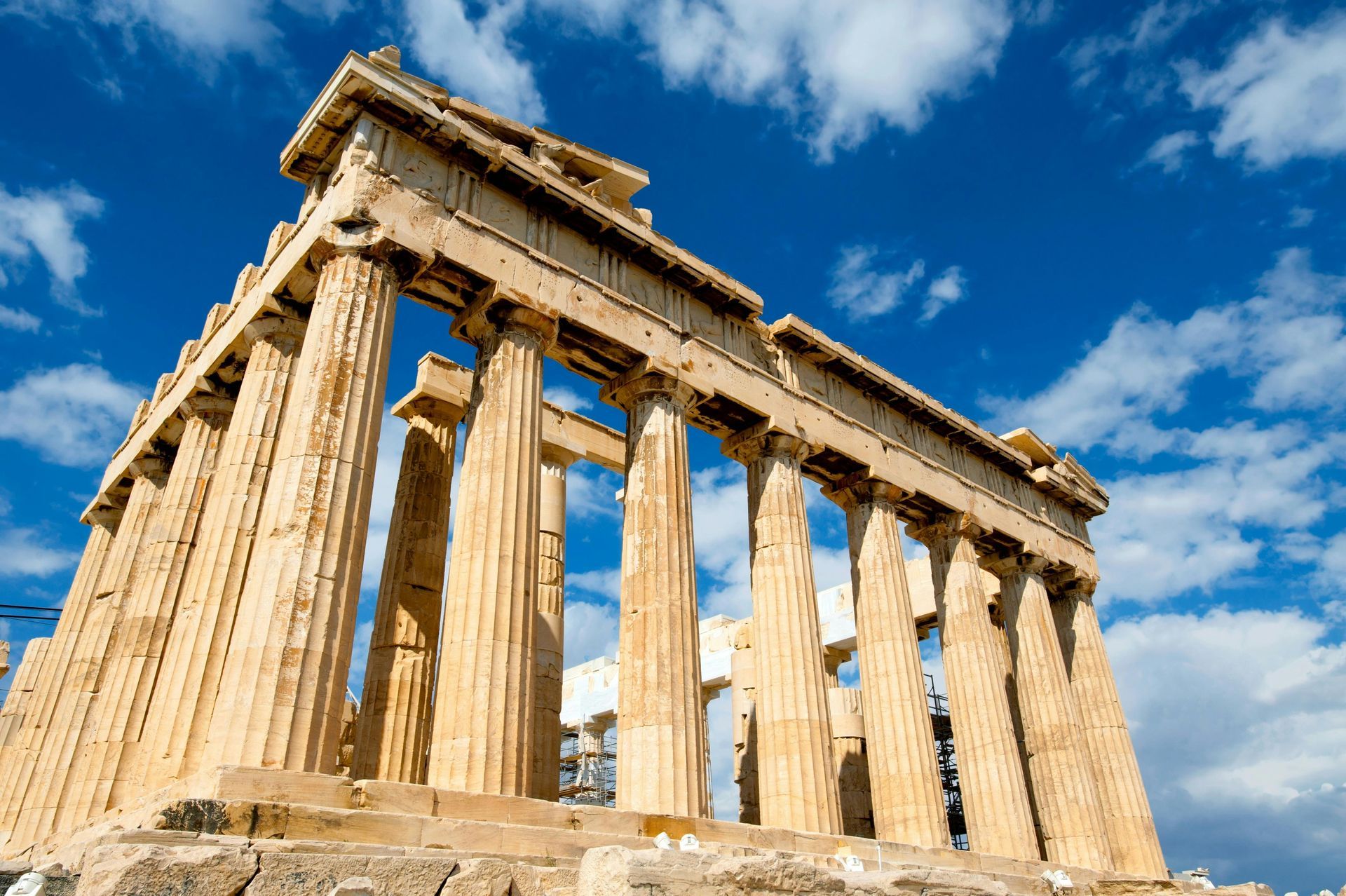
On the boat from Aegina town, an earnest looking dyke with middle-aged ankles and feet shod in Soft-Mocs flips through a guidebook for Gay Athens, trying to keep the sides of her unzipped turquoise windbreaker closed with her elbows pressed tight to her sides. Her eyes slide over me for an instant, then they’re gone. I’m wearing sensible shoes and my Tilley hat and snapping photos of the shoreline. How does she know that I’m not? One of the sisterhood, I mean. Perhaps I could be? We disembark from the ferry to Piraeus in front of a heavily laden yellow transport truck, a window frame delivery van and a fleet of stinking motorbikes. We lurch towards the intersection. I think of grade eleven history and having to read The Iliad . What would Odysseus the Cunning, son of Laërtes and Anticlea, husband of Penelope, and father of Telemachus, Acusilaus, and Telegonus, think of this twenty-first century chaos? The grimy squares of sidewalk are so cracked and disarranged it’s like a moonscape. Getting from the port to the Metro station, it’s more like wrangling dead cows along the narrow walkway rather than our suitcases with big wheels. The noise is tremendous—honking, shouting, klaxons, music. At eleven in the morning, the air is thick with traffic haze and the clinging veil of ferry smoke, but it’s surprisingly odorless. At the next corner, the traffic light turns green. The walk signal flickers a vague yellow. Navigating six lanes of traffic should be a breeze, we think. After all, there are four policemen standing at the crosswalk; however, they’re smoking and talking to one another. We draft in the wake of an old lady with a bundle buggy and finally get across. Our pace is slow and we hear the impatient clucking of pedestrian tongues behind us before they trot out into the street and brush by. We navigate around the vendor booths on every corner, tripping up on street cart flotsam and cigarette butts. There are curb cuts, sometimes, where they’ve been broken down by decades of car tires. Even the curbs in the old port are marble – crumbling and filthy, but marble, nevertheless. Whose were the hands that made these thousands of years ago? In Greece, marble is as ubiquitous as concrete is in North America. Like the ancient traveller, we’re left to our own devices.
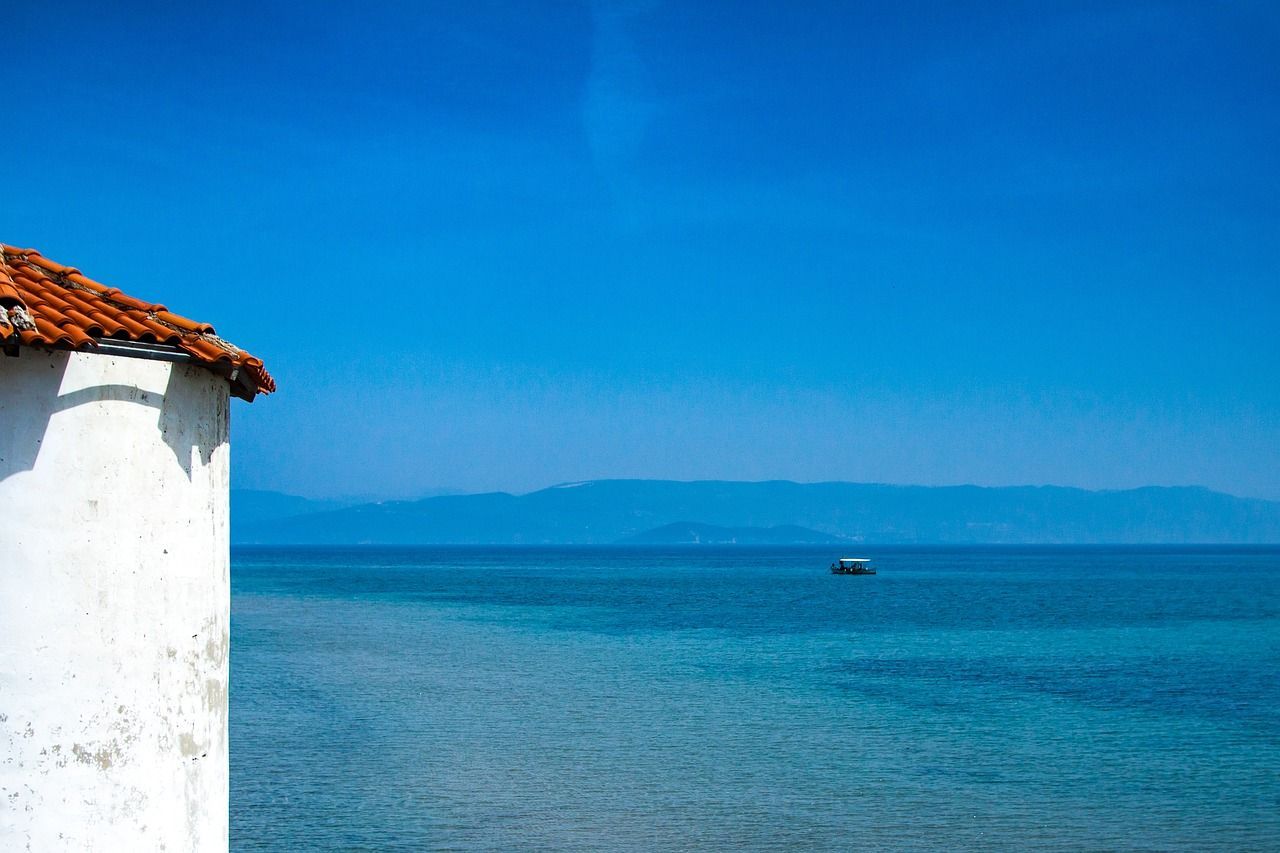
Another 40 degree day under denim blue skies on the island of Aegina, pistachio capital of Greece. We’re kitted up with our brimmed Tilley sunhats, sensible shoes and a slather of SPF-40. Hub’s toting a day bag packed with energy bars and frozen water bottles that are sweating through to his back. Why are we doing this? I’m a student of ancient history and Greece has always been ‘the’ place to see for me. Hub isn’t wild about museums and doesn’t care that much for history, but we’ve trekked side-by-side through the Louvre, Gamla Stan in Stockholm, over cobbled bridges in Bruges and up the dizzying pyramid spines in Tulum and Thai temples, and he’s never said “no, I won’t go with you”. Love of my life for so many reasons… We’d been hiking for an hour on our way up to the Temple of Aphaia Athena. It seemed like a tidy jaunt when we looked for it on the map, but although the guidebooks described it as being only 4 kilometers from the centre of town and remarkably well preserved, they failed to take into account that our state of middle-aged fitness was not equally remarkable or that the rutted, rocky cart path twisted up the mountain on a 35 degree incline and had not a stick of shade. Every set-back house along the way was guarded by large, irritated dogs attached with frail-looking chains to concrete blocks in the scruffy yards we stroll by. I think about the legions of ill-fed slave construction workers who walked this road two thousand years ago, clad in rough sandals and thin cloth, beset by mounted overseers with whips. They strained against the pull of the hill, not to take pictures of dusty debris, but to toil until death over those carved stone columns I’m so eager to see. There are mounds of stones piled everywhere under the trees – hasty graves, perhaps? But it’s hard to contemplate in these surroundings, with the resinous scent of sun-baked pine in our nostrils. We pause now and then to lean against a light post. I’m tired and I can see that Hub is too, but I cajole him to continue ‘just up to that bent-over tree’. He smiles, reaching for my sweaty hand, and when our fingers fold together, I feel that familiar meaty throb deep in my bones. Again, I realize how lucky I am, that this amazing man who has been more places in the world than I can imagine, is hiking up this pebbly hill under the blazing sun with me, and that sometime that evening, when we’re cool and rested, we’ll laugh about our seniors’ moments of inspired silliness. Fifteen minutes later, though, hotter still and covered in a fine layer of sand stirred up by our feet, we stop (halfway up, we think) at a relatively flat stone outcrop – some sort of firebreak bulldozed between the dusty trees and endless stone fences – and he shrugs off the backpack. We drink some more water, feeling the muscles in our calves start to twitch, chatting about how the sun is crisping the skin on our bare arms and how much farther we’ll ascend before making the go-no go decision. The view over the brightly-painted rooftops to the white yachts bobbing at anchor on the sparkling waters of Marathon Bay is dazzling and we snap off a dozen photos, fiddling with F-stops, trying to adjust our digital light-meters to the harsh glare. I finish first and stand behind Hub, watching him frame his shots. He stops and stares towards the shimmering horizon for a few moments. I take a step forward and lean my front against his broad shoulders, pressing my chin into the soft curve between his ear and his shoulder, wrapping my arms around his chest, inhaling the aroma of his heated body until I feel light-headed and reckless. He leans back a bit, stretching his arms back around my hips to pull me closer and I think that this is another one of those best times that we’re accumulating, heated and juicy with the unexpectedness of it. He murmurs an endearment in Swedish as I spread the collar of his shirt and drop kisses on the flesh beside his throat. Behind the rustle of the trees, we hear the scrape of footsteps down the road and a rangy, hatless blondish woman strides around the corner. She carries no water or backpack. She’s not wearing sunglasses or breathing hard, either. Up close, she looks to be about 70 years old. Her tanned face is corrugated from exposure to the elements, but she has a lovely wide smile below bright blue eyes. “Are you going to the Temple,” I ask as Hub and I step apart. “Jå, jå. About 2.5 kilometers more.” She points with a swirling motion to beyond the tops of trees bending under the wind on the crest of the hill. “Not far.” Then she says, “I do this every year for 9 years. Good walk.” I reply, “It’s too hot. We need cold beer.” Hub pipes up, “ice cream, ice cream”, so we smile goodbye and she continues her trek up the hill. If anything, retracing our steps is more punishing than the ascent. The so-called road is slippery with gravel the size of marbles and we step downwards and sideways, like mountain climbers descending the flank of a glacier. The ice in our water bottles has melted to body temperature and the dust of the ancients that I’d wanted so badly to experience is clogging our throats. Have we been eating enough salty olives and feta to ward off sun-stroke? The yard dogs are hotter and angrier than an hour before, snarling and lunging at the iron fences as we trudge by. At the coffee shop, I stare at the menu, trying to decipher the alien alphabet, then find a tiny picture – ice cream. Euro 6 for a cone, the owner says from the shade inside the bar. Hub shrugs his shoulders and sits down under the awning but I shake my head and make an impolite noise with my mouth, then say out loud- episis akribos – too expensive – and drag out a chair. The man had gone back to buffing the zinc counter but when he hears me, he hustles over and stands too close to my arm. “I give you a cup – no cone. Three Euro only, okay?” “Okay. Efharisto .” We lounge under the shade as we dip the plastic spoons into the creamy chill, saying um, um, smiling with our faces pressed close together and feeding each other the smallest of tastes of each explosive flavor. After a while, watching the parade of spray-painted scooters and crapped-out Ladas puttering up and down the street becomes tiresome so Hub pulls out a day-old Svenska Dagbladet and I flip open my spiral-bound pad and begin to make notes about our morning. A suety dame of about 60 arranges herself loudly at the table next to ours. The place is empty except for us, but it seems that’s ‘her’ table. She stares through dark glasses with frames like the front end of a Maserati – all golden and sleekly sweeping out to the sides. Her jeweled fingers hover over her helmet of immovable hair and her mouth has the pinwale corduroy above-the-lip wrinkles of a woman much put-out. I’ve seen that appraising look of hers before – who are these people, she’s thinking – the substantial black woman sporting a plump orange flower pinned to the band of her hat, the sleeves of her blouse rolled above her elbows, sitting knee-to-knee with that more substantial toasty-skinned blonde man wearing pants-of-many-pockets and a shirt that matches his deep blue eyes. I suspect she’s asking herself why we’re there in that little café and perplexed that we dare to enjoy each other so much, in public. Or maybe not. As Hub would say if I mentioned it, who cares ? He’s right, of course – all that matters right then is us. Sure, she notices me stop writing and gaze in her direction, but she doesn’t give a damn. Well, I’ve grown accustomed to her kind of scrutiny so although I take note, I shrug and don’t give a damn, either. I fiddle with my camera so I can take a few pictures of Hub and I with the auto-timer, then he takes a couple of us with his movie camera. We laugh at the playback because we’ve got ice cream on the corners of our mouths – peach on mine and chocolate on his – then we kiss and it’s gone. Later, I sneak a glance at her from under my brows, but she’s lost interest.
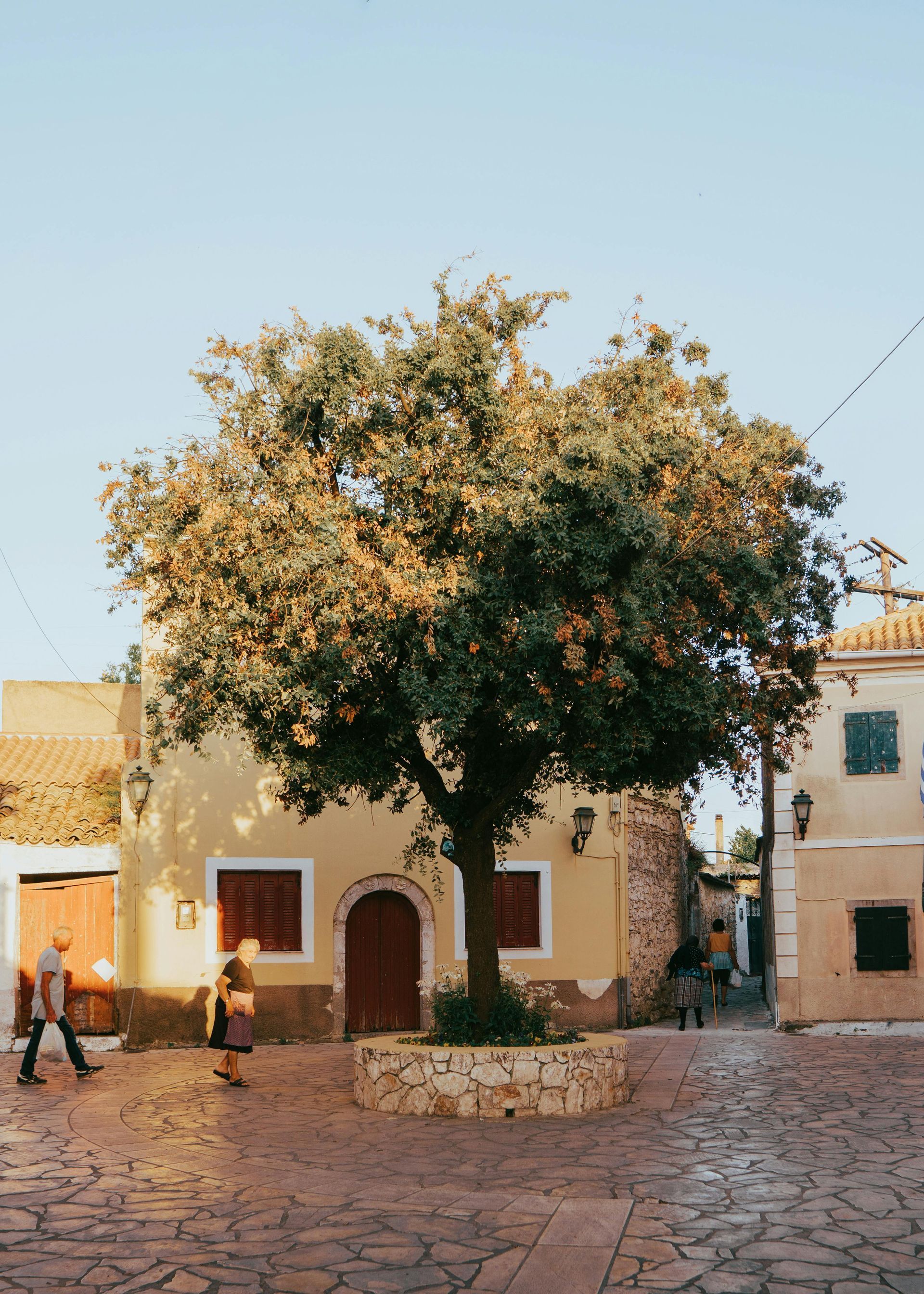
We order Greek salad from Stella every day for lunch, and it’s glorious. Ruby chunks of tomatoes juicy with sunlight, cucumbers thick with the flavor of growing on vines in the ground under the relentless Peloponnesian sun, fat slices of red onion – sometimes marinated, sometimes not – topped off with a slab of feta cheese, the smoothest, creamiest feta cheese (no smell of goat or wet wool here) that turns out to Bulgarian rather than Greek (who knew?), a sprinkle of oregano plucked from the garden and a healthy douse of olive oil. No lettuce. Never lettuce, Stella says with horror. We sop up what’s left in the bottom like desert-island survivors, using the heels of our bread and scouring the bowls clean. It feels like eating a party, it’s so exuberantly delicious. The taxi driver skids to a stop in a spray of gravel. He’s right on time. He heaves Leif’s bag into the trunk of the Mercedes, then my backpack, but my Samsonite is this side of too wide and too tall, but he jams it in on its side and straps the trunk lid shut with an arm’s length of tired bungee cord. He opens our doors, then hops behind the wheel, tossing the buckle end of his seatbelt into the centre console. “Safety,” he says with a grin and guns the sedan north past our favourite gyros restaurant, in a direction we’ve not explored yet. The car picks up speed as he ascends into the dusty hills. It seems the ‘slow’ sign – blue circle rimmed with red – is a mere suggestion, and he tugs the steering wheel from left to right, not bothering to downshift, his thumb working the buttons on one of his cell phones. At 70 km an hour, he’s muttering a lot, wrenching around scooters going the speed limit. The olive trees lining the side of the scantily paved goat track-road begin to blur. Just before each hairpin curve is a cluster of tidy houses tucked back from the road. The foreheads of the hills are creased into frowns. Up close we see they are miles and miles of neat dry fences made with fist-sized rocks – the Greek are obviously skilled masons with lots of time on their hands. Of course there are ruins everywhere you look, with new dwellings constructed on the foundations of old. To dig a foundation and unearth a clay shard or scrap of ancient bronze compels a full archeological survey, so ancient walls jut from the sides of modern houses like stony cowlicks. On the sides of the road, small shrines sit atop posts, miniature houses painted white and blue or rusting away; inside, faded photos of the departed behind grimy glass, huddle alongside a pair of little oil lamps, a handful of dusty plastic flowers and a pile of rosary beads. Dear Lord, he’s careening into an S-turn, uphill, passing a woman in a business suit driving a red scooter at 80 clicks, even though it’s a double-yellow line and there’s a sheer drop on the left hand side and a grainy unforgiving-looking shoulder of stone on the right. He jerks back into his lane as a blaring rattletrap loaded with brown plastic barrels of olives roars by in a blur of stinking dust. I now understand the need for the prayer beads swinging wildly from the rear-view mirror, the rabbit’s foot suction-cupped to the dashboard. There’s a school bus in front so he has to slow to 60 and I can actually see the scenery again. To the right, high up on a rocky hill spotted with clumps of scrub oleander, right near the top, no trails in sight, is an impossible handful of tiny stone dwellings, roofless. Who lived there, when and why? Surely even sheep would have had more sense than to scramble up that ochre-coloured scree or graze cant-legged with a spectacular view of Aegina Town. We’ve passed the bus but our driver jams on the brakes as he exits the next long curve. The picto-sign attached to the white stone fence says ‘dead end’. How appropriate, as it fronts a field of urns full of olive branches and fresh flowers and white stone crosses in tight formation. A quick left through a small neighbourhood, then a procession of grocery stores and warehouses – we must be close to town. Ah, it’s market day. Old men with cigarettes drooping from indentations on the sides of their mouths perch on plastic chairs by bins of onions and braided garlic; matrons with shopping bags hanging from their scooter handles curve through the crowds to get a closer look at those red-orange carrots, the fresh-dug potatoes. A trim woman in a green sweater piles up figs on a counter by the dock, offering slivers of samples. She sips from a tall plastic cup of frappe. Farther along the street in the quay-side tavernas hang lines of glistening octopus drying like pulpy laundry. Our driver wheels past boats loaded with boxes of just-caught silvery fish curved into commas of rigor. He curses sotto voce in Greek – the language may be foreign but the cadence is universally familiar (something rude about someone’s mother or maybe their heritage, I think). It’s only eight o’clock in the morning but the banks and kafenions are open. Men (and a handful of women tolerated at separate tables) sit in groups facing the street, like it’s a stage (and with that cacophony of colour and noise, it is theatre!), prolonging their carafaki ouzo with unfiltered cigarettes and arguments about politics or last night’s football. It feels like I’ve awakened in some hideous land of harpies. Okay, so it’s only 41 Euros a night plus breakfast – but this? I crawl out from under the thin sheets and peek out through the drapes. There’s a squad of weary-eyed black-clad women with tied-back graying buns and flat shoes milling about the courtyard of our hotel calling back and forth, laughing, gesturing as they get ready to pile into a shiny clunker and drive to the church on the hill. Their voices are at a frequency better suited to being heard by dogs and children. The cacophony is worse than a schoolyard – more like a barnyard. What do they find to talk about all the time? I know they’re all related because they’re always around the hotel, berating their desk-clerk relative when they’re not watching dubbed American soaps at high volume. They see each other every hour of every day. They don’t read the newspaper or books. When they sit, their hands are idle in their laps. Damn it, you’d think they’d be more contemplative on the Sabbath, keep fucking quiet on a Sunday morning, with the sun just barely up. I put on my bathrobe and wander out onto our balcony. One spies me and starts shrieking a question in Greek. I press a finger to my lips and say Anglika – then katalaveno – Anglika . English – I don’t understand you – English, but the old bitch is so loud my ears vibrate. The others are laughing at our exchange like it’s high comedy. The witches of MacBeth had nothing on these shrews. Even the younger ones, distinguished by their upswept still-dark hair, seem hard-faced, as if they’re preparing to be angry and disappointed. Shouldn’t they all be in church already praying for something? If it was late afternoon, I’d think they were all drunk. I slam the wooden door shut and crawl back into bed thinking, I’m beginning to understand why the men stayed away at war. No wonder so many ancient Greeks killed their mothers and exiled their sisters. There’s an ebb in the noise, a few giggles. Ah, there must be a man around. The women’s voices soften and then there’s an explosion of laughter. A second male voice rises from under the awning. I recognize that it’s Costas, the smooth-talking baker from down the street. Now the two men are talking/yelling and I catch the word ‘Manchester’ – ah, it’s about last night’s football. Aside from some sharp-faced Apollonia with Cleopatra eyes rattling off the news on the CNN feed from Turkey, and the quartet of fat talking heads on Greek TV, that’s all the men watch, channel-surfing from match to match with the fervor of junkies trying to find a usable vein. I’d be soccer-mad too, if life was so uneventful, so much the same from hour to hour every day. I smell cigarette smoke, harsh and dry in the soft morning air and recognize the brand smoked by Stavros, the old man whose daughter owns the hotel. Second hand smoke – more like 242ndhand smoke – is ubiquitous, except in church and nursery schools. The Marlborough man may have cashed in his own chips, but those red and white boxes are everywhere. Where are the rest of the men, anyway? Haven’t seen any pretty Greek boys. Or ugly ones, for that matter. We’ve seen only a few between the ages of 20 and 50 and they look broken-down in some way. They can’t all be fishermen or travelling salesmen. Of course, there are the priests with scraggly grey ponytails. They stride down the street in their black flowerpot hats and swirling robes, wives dutifully following behind lugging the bags of groceries, but they don’t pay attention even when the street curs nip at their heels. Women run the bakeries, the jewellery stores, the restaurants, the bars. There’s an old man with a tanned ball of a head who sits on a stool outside Helen’s Shop for most of the day, grinning at passersby, waving at the racks of discounted postcards and offering ‘bus teekets’. He looks to be about 80, but he’s sharp and has a wicked grin. He lives in a big house on the hill overlooking the bay, so business must be good during tourist season. One day we succumbed and stopped to pick up some cards to send back to the kids. The sale rack offered mainly faded, curled-up touristy scenes but the price was right so we bought half a dozen. Leif went off to pay (the old man wrote the total down on his hand with a ball-point pen and did the math to make change) and I moved on to the higher-value merchandise. For only .30 more, I could have selected from some of the vilest photos I’ve ever seen outside of a police evidence locker. In one, a young woman smiles from under a bouffant brown hairdo, tanned legs spread wide, a silver padlock dangling from her labia below a neatly trimmed landing strip; an older gent with tired eyes busies himself between the thighs of a faceless woman, her dark bush arranged so that it looked like he was wearing her as a mustache; badly rendered copies of amphora depict grinning athletes, their oversized phalluses curved like scimitars, romping with equally naked horse-hung mates, some of whom were being mouthed by sinewy young men balanced like tripods on knees and massive organs. Is this what Euripides and Socrates did in their ‘down’ time? What was it called before the term ‘daisy-chain’ was invented? On another rack, pouty hairless men and breasty, red-lipped women, their eyes as energized as pistachio shells, stare into the cameraman’s lens from under Donnie and Marie hairdos, captured in positions I’d not have thought humanly possible except in Cirque de Soleil . But then again, they were young and doing it for money and, perhaps, a ‘career’. If I turn to my right, there’s a rack of icon reproductions, glass hyperthyroidic blue and white eyes on strings that are good luck symbols and prayer beads. This is truly a country of contradictions!
It’s nearly noon but the Athens subway is surprisingly crowded with people of all ages and shades of the human rainbow, most either carrying something, thumbing their cell phones or listening to music or videos through their earbuds. The heavy-lidded dude perched on the edge of the seat diagonal to mine is wearing cheap Chinese fabric shoes. His face is creased into a permanent frown as he fingers his prayer beads. It’s as if he smells something foul. He’s giving me the once-over – I’m wearing shades, man, but I’m not blind! A red and green striped awning of a shirt stretches over his belly like an apron. His haunches are spread over a seat and a half but his inadequate junk doesn’t make more than a suggestion of bulge. A young woman sits across from me. Under caterpillar brows, those bloodshot eyes probe her body like fingers. A tanned older man in blue worker’s overalls sways by the Metro doors to the rhythm of an internal melody. When he turns his head and glances out the window at the blurring scenery, I see a most magnificent fleshy parrot-beak nose jutting from his muscular face. He’s sporting a forest green wool sweater tied nattily around his neck. He juggles a bright blue plaid plastic shoulder bag in his hand as he stares into the middle distance, a smile tugging at his lips. A dumpy woman dressed in black, her handbag strapped across her chest, has planted herself at the front of the subway carriage, declaiming loudly in a harsh voice. The morning commuters around her wince as they edge away, leaving her in a narrow DMZ. They poke at their cell phones, dialing someone, anyone, trying to look busy, shaking the pages of their Metro newspapers and darting glances everywhere but at her. Ah, she’s begging – I recognize parakalos , please. A path opens as she sways down the length of the car, muttering her useless mantra in the faces of anyone she can confront – parakalos, parakalos, parakalos . Outside the Syntagma Square stop on the grimy marble-curbed sidewalk, a rough-skinned woman in a faded flowered dress positions a plastic crate in front of the sliver of a hardware storefront. There’s a bundle under her other arm. She sits down in the morning sun, modestly spreading out her skirts over splayed knees. She arranges the bundle—a limp, dark-haired child of about four—and droops against the store window with the child lolling in her arms. She’s perfected pitiable, murmuring to passersby for change, shaking a handful of bait-coins around the bottom of a brown paper cup that says Coffee Time on the side. In the afternoon, a dark-skinned man takes her place after a brief conversation. In his arms is another flaccid child that he drapes against his shoulder. His voice is more strident; the cup he waves remains empty. The Marlborough Man may be dead as the dust at the Acropolis, but his legacy lives on strong in Greece. In almost every jacket pocket or handbag is a red and white deck of the iconic American brand of smokes. The men saunter down Athlion Street thumbing their stone komboloi with one hand and their lighters with the other as they check out the female real estate. Women yak on the phone, holding their purses to their shoulders with a pinkie, turning their heads to snatch a drag from the cigarette held between two fingers.
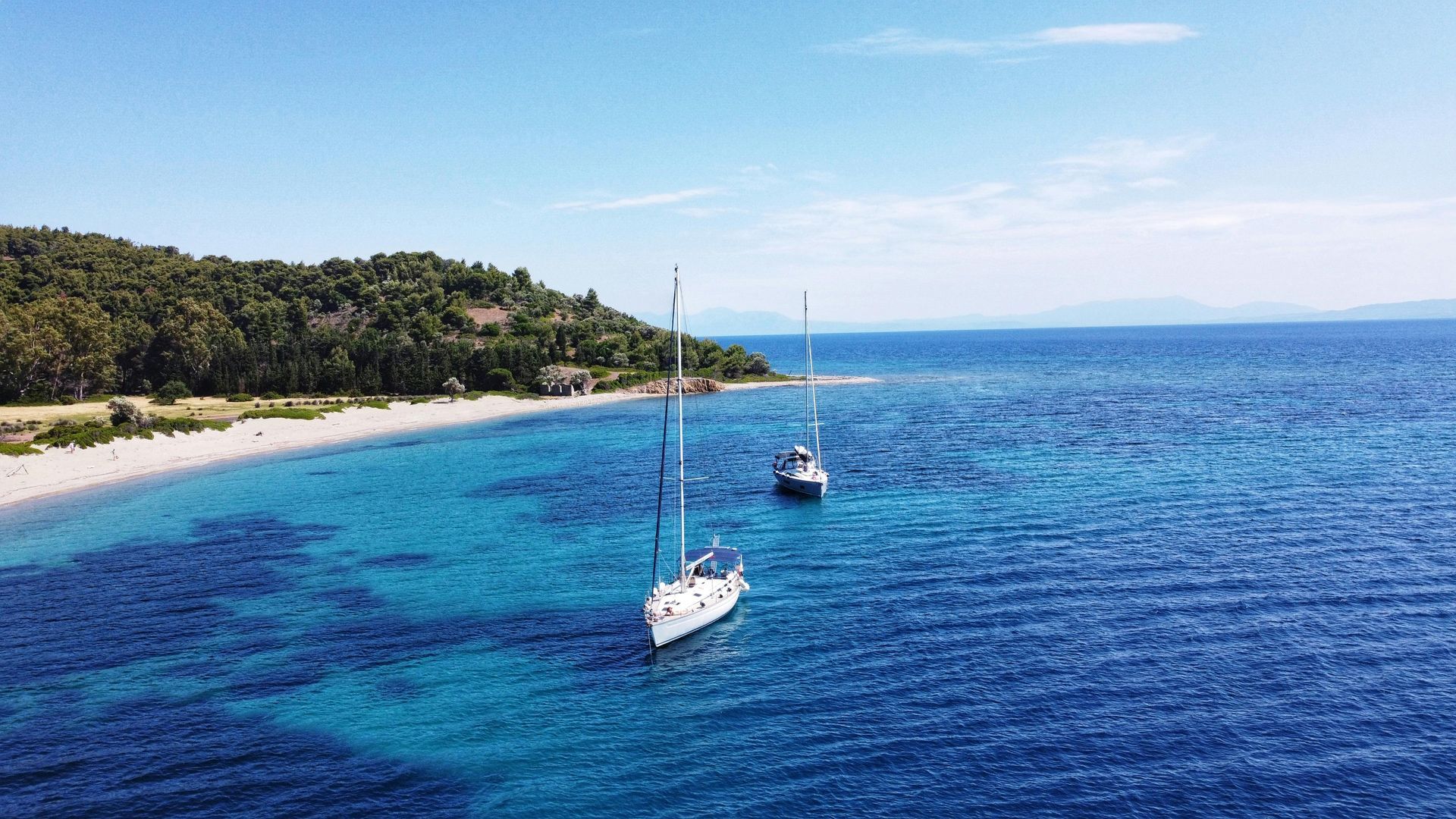
The 15 meter sailboat (small by Greek standards) tugs quietly on the rope lines, rocking slowly against fat bumpers on the jetty. Its hull gleams brilliant white under an early Sunday sky cobalt blue as only a Greek sky can be blue. There’s no clinking or creaking – everything is tied fast, lines taut, the thick stainless steel mast barely swaying, the navy foresail snugged tight in its wrapper. Out of the shadows behind the cabin, a man’s voice murmurs something in American-accented French as a thin dark-haired woman wearing tight navy shorts and a striped sailor’s t-shirt steps from the deck onto the concrete dock in Aghia Marina. She lands gracefully on her bare feet and laughs, seemingly for no reason. She scans the harbor and the dock, whistles, then bends forward at the waist, her hands behind her back. A low-slung black stray with pointed ears emerges from behind a wrecked rowboat and stops about three meters away with his nose in the air. The woman extends her right hand. The long nails on her fingers and toes flash crimson under the punishing sun. She’s holding some torn croissants and tosses morsels in his direction. He inhales them one after another. Each lands closer to where she stands. All the while, she’s smiling and mouthing sweet words in French, calling him pet and darling, inquiring about his health as she inches backwards towards the yacht. She hunkers down and reaches back with her left hand as she calls out softly to the man lounging on deck to pass her more food. Inducement , she said. Jack, as she called him, picks up a fat sausage from a plate on the table by his elbow, leans forward and presses it into her palm. Tearing the meat into pieces, she coaxes and teases until the animal is tonguing fragments from the concrete half a meter away. Hands empty again, she straightens and wipes the grease from her fingers onto the side of her calf, stroking her leg and calling out softly. The cur creeps forward on his belly, craning his wedge-shaped snout upwards, snaking out his broad pink tongue to lap at her flesh. The woman squeezes her eyes shut and clenches her fists, lips open to the sea breeze. When the licking stops she opens her eyes, reaches back her arm and snaps her fingers. The dog cringes at the sound but Jack moves slowly, this time handing her a piece of ham. She holds onto it and the dog nibbles around the borders of her nails. She begins to scratch behind his ears, talking as if to a child. “Do you want to come with me, Precious? Do you want to play?” He dips his chest onto his forepaws but doesn’t wag his tail. She scruffs her fingers through his fur. A crewman sticks his head out of the hatch and begins to climb onto the deck, whistling. Jack snaps a command and the man backs down the stairs. “Esme!” Jack’s whisper is harsh. The woman kneels down beside the dog now, her arm around his neck. “Quoi?” She speaks without turning her head, her carmine mouth close to the dog’s. “Stop screwing around with that mutt,” Jack says roughly in French, gesturing with the back of his hand. “He’s filthy.” “Pah. I can bathe him.” Esme hugs the dog around the neck, stroking his back and down his legs, but he angles his hindquarters away. Still speaking softly, she takes his face in her hands and draws his snout along her inner thigh, pressing her other leg against his side. The dog whines and pushes against her as she murmurs in French, then opens her legs and playfully pulls him in. He pushes too, tongue lolling. “Good boy. Good boy,” she says, stroking his chest. Jack calls out “Esme!” and presses a button beside the wheel. The sailboat’s motor turns over with a muted grumble. The crewman reappears and begins to untie the mainsail. “It’s time to go.” Esme has the dog on his back, tickling and stroking along his belly as he keens and curls under her hands, his paws clawing empty air. She stands abruptly and brushes her palms hard along the side seams of her shorts. “ Pas assez ,” she says aloud, backing away as the dog twists to his feet in a rush and dances in a confused circle around the dock, panting. Without taking her eyes from the dog, she reaches for Jack’s hand and he guides her onto the deck. Jack and the crewman work the lines free of the mooring and the boat draws away from the pier. Esme is on her knees by the railing, fastening the rope to its clips. That done, she stands and begins to wave her arms above her head from side to side calling, “Au revoir, mon petit. Au revoir .”
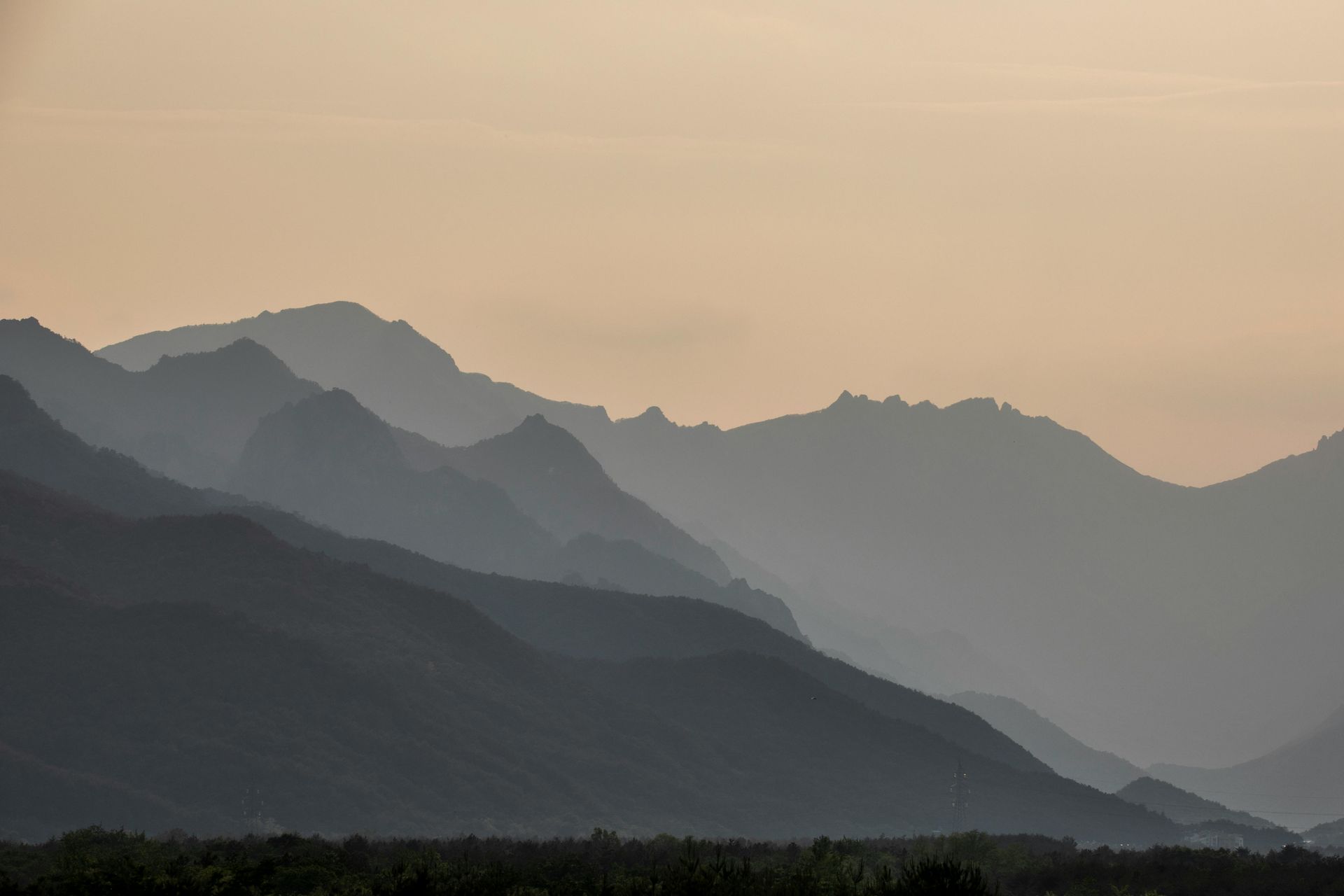
The most sobering part of our trip was the day-long tour to the Joint Security Area separating the Republic of Korea from North Korea along the 38th parallel – the Demilitarized Zone or DMZ. Ironically, it’s the most heavily militarized border in the world. The army base is huge and the soldiers are not for show – they are in a state of constant readiness to repel an attack from the North. Miles and miles of razor wire and freshly-painted spiked equipment glint in the sun. Two hundred and fifty kilometers long, and about 4 kilometers wide, the DMZ is both a testament to hope and an example of blight and discord. All vegetation that could conceal escapees has been cut. The mountain sides are dry wastelands. The Korean War is the first major event I remember from my childhood, because the grownups would talk about it over dinner. In June 1950, 75,000 North Korean soldiers from the People’s Army, supported by the USSR, poured over the border and kicked off the Cold War. The Korean War officially ‘ended’ in July 1953 with a brokered truce, after more than five million civilians and soldiers died. The wounds are still fresh. The TV series, M.A.S.H, was set in Korea but from the museum photos we saw, there was nothing light-hearted about the widespread destruction and cold-blooded assaults on civilians as far south as Seoul. The toll was appalling. The two countries are still at war. On the outskirts of Seoul, the scenery changed from commerce to conflict. Razor-wire and chain link fences line the muddy river banks and a four-lane strip of highway. Camouflage-painted pillboxes stick up every 250 meters. Until recently, there were soldiers stationed there; now, they have digital surveillance cameras with night-vision lenses. The far shore isn’t that far away. Thousands have drowned or been shot trying to swim to freedom in the South. At the entrance to the DMZ, soldiers boarded the bus and checked our passports. This was not a cursory glance, but an intense scrutiny of faces and documents. Polite, but intimidating. Two of the passengers didn’t have the proper papers, and were escorted off to wait for our return. Despite the one-hour wait, the parking lot was crammed with tour buses.We were reminded to pay attention to signage and not to stray from the marked paths. As in Cambodia, the remnants of conflict make exploring deadly. During the war, so many landmines were planted it’s estimated it would take an army 200 years to clear the land. Instead, much of the DMZ is a nature preserve. Soldiers still patrol the area. Watch towers on the river are manned 24/7. A few feet away from the warning wires, a tour of school children ate their lunch.I n the land between the main highway and the road leading to the Security Area, farmers cultivate rice. A strange juxtaposition, but life must go on and arable land is scarce. I’d wanted to visit the invasion tunnels but changed my mind when I heard them described as dark, damp and cramped rock tubes that, due to their steepness, are hard to navigate. There are four Tunnels if Aggression, totalling thirty kilometers in length, dug from North Korea up to forty-eight kilometers from Seoul. If the network had been completed as planned and not outed by a defector in 1978, up to 10,000 North Korean soldiers could have infiltrated the south. I satisfied myself by examining the mock-up and watching a film. Skirmishes continue – remember the USS Pueblo being taken hostage by the North Koreans? North Korean soldiers regularly take pot-shots across the border and often hit their mark – soldiers, farmers, tourists – doesn’t matter. As we stood on the observation tower taking photos, our guide casually remarked that a Hong Kong tourist had been picked off the previous year. People in the Republic of Korea live in hope that the Ministry of Unification will make Korea whole again. A beautiful station – used only by tourist trains – was built at the border in anticipation of reunification. It sits shiny and empty, on the edge of no man’s land, a few hundred meters from a gigantic peace bell. Beyond that is a strip of asphalt road leading North, travelled by the occasional truck bringing industrial supplies to South Korean factories locating in the cities hugging the border. Business is good because labour is so cheap and of course, there are no unions or labour laws to hamper prosperity. Yes, there is an elite that lives well in NK, but while millions of dollars are spent on armaments and armies, tens of thousands of citizens have perished due to starvation and cold. Going to the DMZ was something I felt I had to do. Every time I look a the photos, though, and remember the bleak expanse of scrub land and the millions who died, my heart is chilled.
As our flight to Santiago was coming in for a landing the flight attendant told us about the items we were not allowed to bring into Chile: edible products of animal origin, flowers, fruits and vegetables, no dried fruit, trail mix or nuts, honey, home baked goods, unpackaged candies, etc. If you’re caught ‘smuggling’, the fine is $240 US and you’ll have to languish at the airport until a magistrate arrives to process the infraction. Yikes. As usual, we travel with healthy snacks, granola bars, salted almonds, etc. in ziptop bags. They all went into the barf bag. Being a good recycler, I folded up the plastic bags and tucked them into my rolling backpack. No biggie. Wrong-o. As Hub and I watched the luggage coughed out on the belt, a cute little pooch wearing a fluorescent vest wandered around. I thought, Ah, drug-sniffing dog . Wrong again. I’m not paying attention, because I’m trying to figure out here my big suitcase is and if I have any contraband tucked in with my socks and t-shirt. Poochie sits down beside my roll-on. A young woman in a matching vest asks me if I have any of the long list of items. I say, No, I emptied them out on the aircraft . She smiles as she hands me an official form with a bright pink tag attached and directs me to the secondary inspection x-ray, where a group of bored looking officials are leaning against their machines. One guy points to the conveyor belt. He grins as I heave my bags over. Let’s just say that after 12 hours in transit, I was docile. I mean, I was a tourist in Chile and my Spanish was Grade 12 rusty, so who was I to argue? She searched my hand luggage and unearthed the plastic bags, took a sniff then zipped everything up and sent me on my way. Luckily, she didn’t search my shoulder bag, where I had a small bag of preserved ginger and a half-eaten granola bar that I’d forgotten. Visions of being fingerprinted then languishing in a South American prison cell flashed through my mind. We hot-footed it out of the Customs Hall to our waiting taxi driver. The Andes were bathed in the sulfurous haze that blankets Santiago for most of the year. Traffic was light, the driver didn’t speak any English and we arrived at our hotel in about 30 minutes. What a welcome relief. Our hotel room wasn’t ready, but we hung out in the gloriously bright breakfast room and had our first taste of homemade raspberry juice. Check in was a breeze – the front desk staff all spoke English, which made our life a lot easier. Unpack, shower, then off to explore.
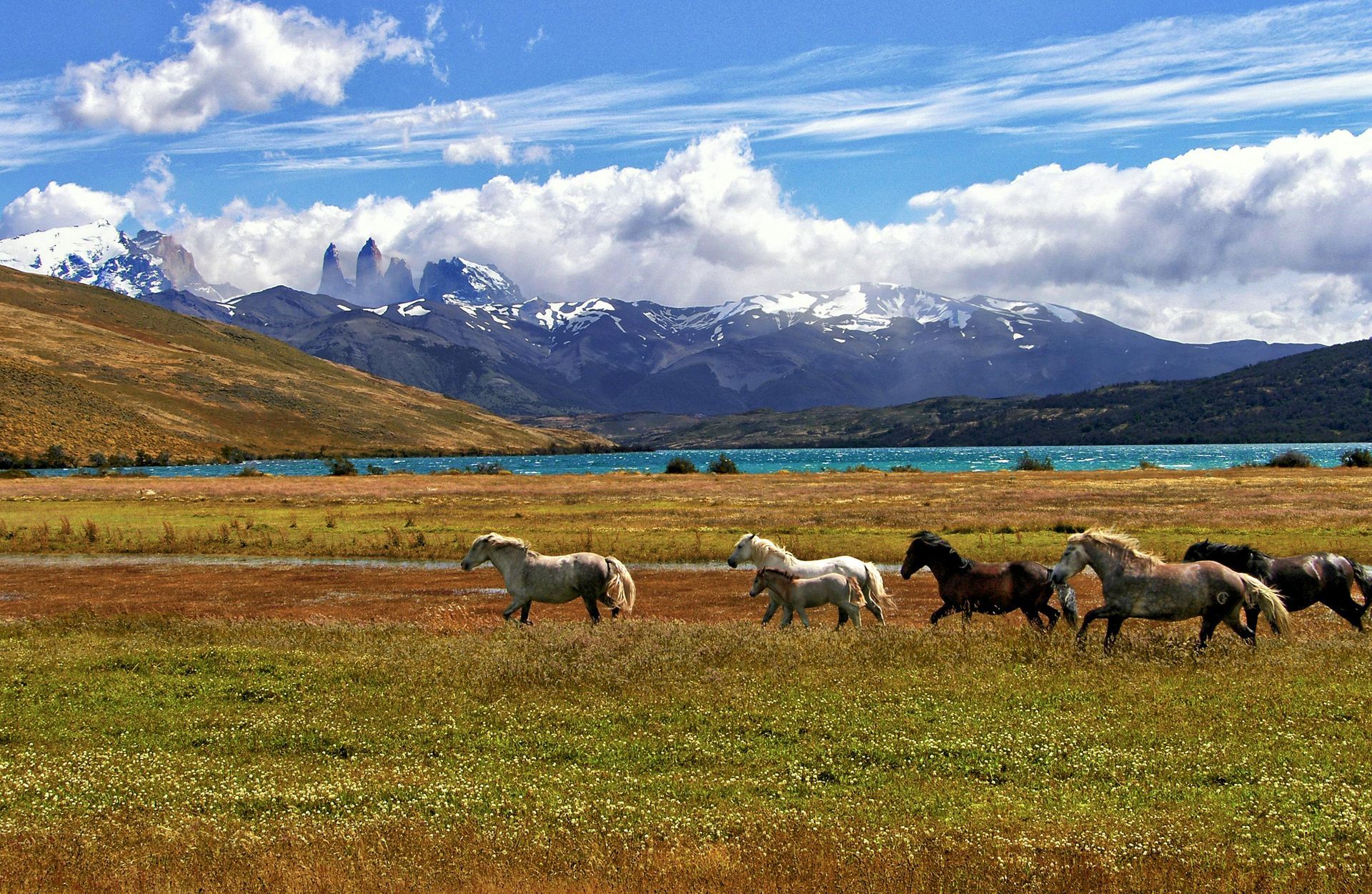
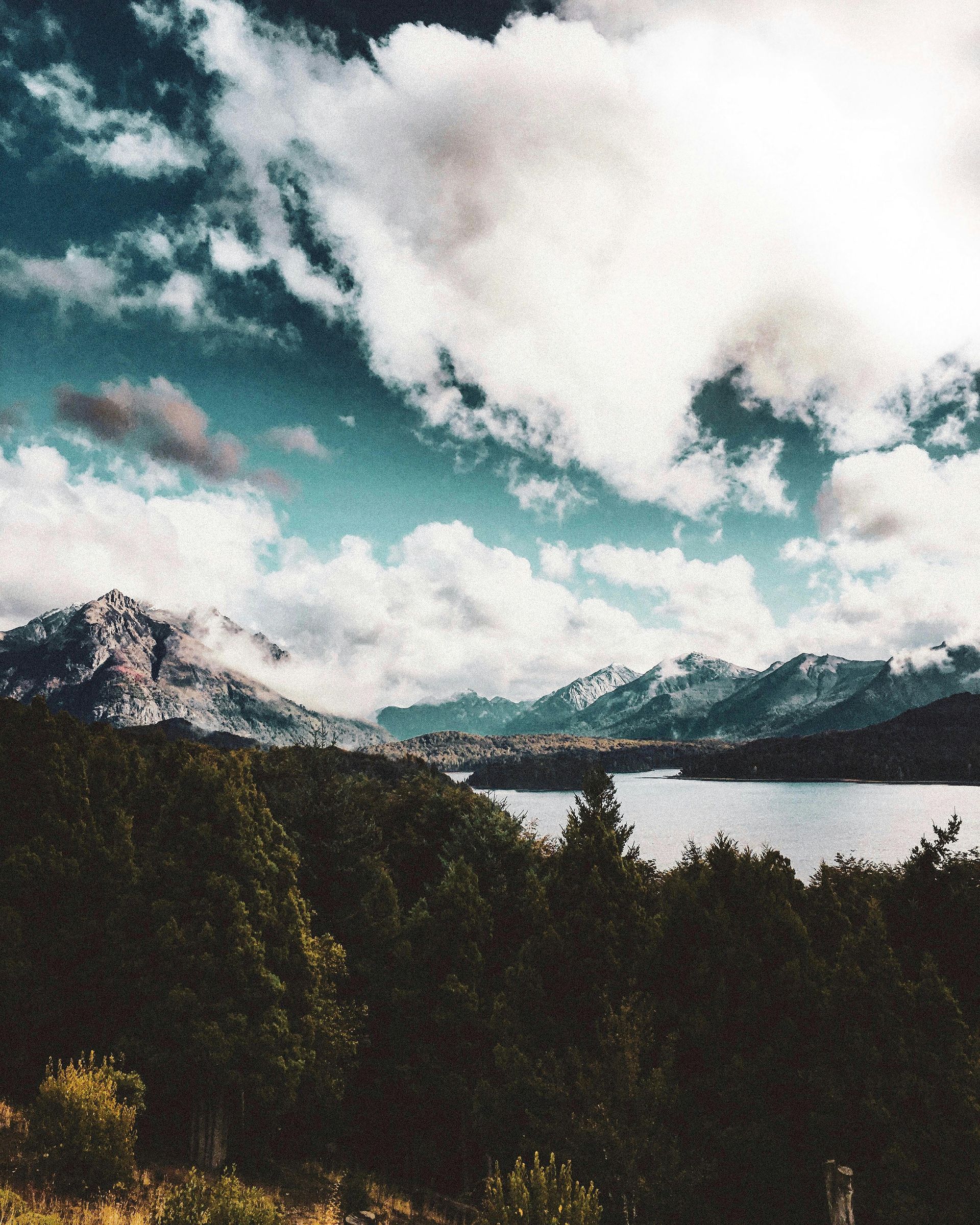
A long time coming, this trip to Chile and Argentina. Of course, Hub had visited in the 70s on business, when the political situation was chaotic and dangerous, but he was selling sawmills and mining equipment and it was before the days of instant communications. If you had work to do, you packed your bags, hopped on an aircraft and hoped for the best. Our trip this time was for vacation and for me, research for my novels. In The Fifth Man, one of the protagonists – Markus – is seriously injured when his mineral exploration plane goes down near the Atacama Desert, in the north of Chile close to the border with Peru. Later, he visits the Swedish consulate in Santiago to renew his passport. I wanted to experience first-hand what that might have been like. I needed to know more about the situation ‘on the ground’ at the time. Did I luck out! More about that later. When we arrived at Pearson 3 hours early to check in, a cheery Delta airlines staffer told us – as we lined up – that the flight was delayed. No problem. We had almost 4 hours to wait in Atlanta for our connection, so we weren’t worried. After 90 minutes, though, with no arriving aircraft in sight, we weren’t so sanguine. Mechanical difficulties. Aircraft is still in Detroit. Not to worry. Easy for you to say, Sister! In 2010, we missed our connection to Bangkok in Minneapolis by 10 minutes because the connector flight idled on the tarmac at Pearson for 45 minutes, then there were strong headwinds, plus the gates were miles apart when we got there, huffing and puffing and severely pissed off. In any event, this time, there was another scheduled flight which did arrive from Detroit and depart on time. We got our reservations switched and arrived at the cavernous Atlanta airport in plenty of time, hopeful that our luggage was with us.The departure lounge was filled with folks chatting in Spanish. Hola! I flipped through my Spanish-English dictionary, trying to pick up on conversations and remember words buried deep since I’d studied the language in high school. No housework or worrying about the grubs destroying the lawn. I find long-distance travel soothing most of the time. The nine-hour (and nine minutes) flight to Santiago was uneventful. We’d sprung the extra coin for upgraded economy seats – two side-by-side at the window, with more legroom. Drinks, read a bit, dinner (ugh, chicken again), wine, bathroom break, knee bends, read some more (Donna Leon’s latest), then sleep. Half-wake, drink some water, snooze. I awoke just as the sky was beginning to take on a light glaze over the curve of horizon. I love sunrise at 33,000 feet. It’s so primal, always brilliant, always life-affirming. Metaphysical. I just know that some ‘thing’, whatever you call that much-greater-than-humanity Being, had a hand in this. By comparison, we creatures are so puny and powerless. Puts things into context, doesn’t it? Like a kid, I spent the entire time until we landed with my nose pressed against the window, snapping pictures, holding my breath, filled with as much sense of wonder at the glory of what was emerging before me as the light of the rising sun was burnishing the skies. But it was -57 degrees out there. The clouds beneath us glowed like rippled sand on a beach, looking substantial enough to walk across. As the light strengthened, they faded to pale and the magnificent Andes mountains rose out of the darkness.