
Write Characters With Lived Experience

Share this article

A Not-So-Quiet Revolution

My novel series is called: Kenora & Jake: Investigations, Mystery and Seasoned Romance. Seasoned romance is a sub-genre of standard romance, except that in this case, it's mature couples (m/m, f/f, m/f) who are the protagonists lead characters in a story.


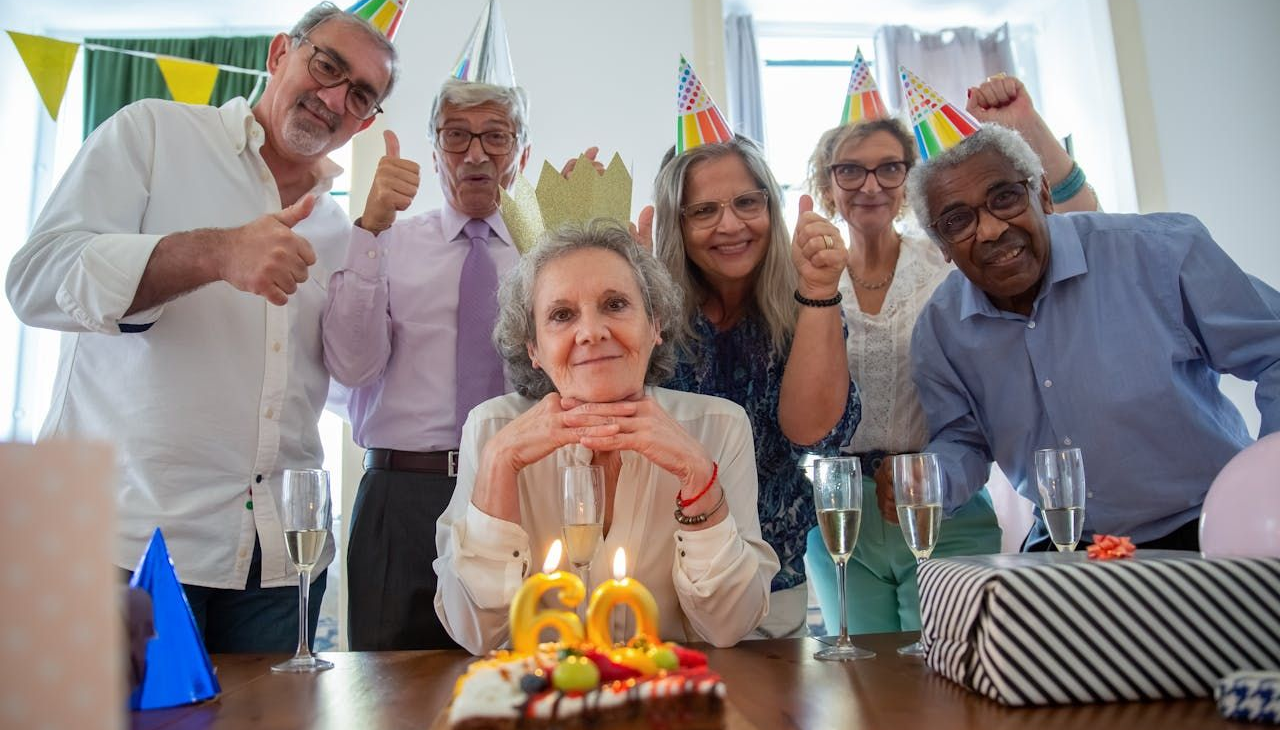
There's a quiet revolution happening in fiction. It has nothing to do with dystopias, billionaires or supernatural creatures. It's the growing appetite for stories featuring characters older than thirty-five.


Early in my novel-writing career, when I was seeking an agent, I spoke with one who suggested I'd get more traction with a younger protagonist (around twenty -five years old) who was edgy and more urban. I spent a year trying to rewrite the original manuscript but I couldn't do it. I was then in my mid-fifties and honestly, couldn't remember much about being half my age. So I went back to the drawing board and started rewriting my novel with characters--Kenora and Jake--who are over forty. In Book 1 of the series, Jake was over fifty.


Maturity has become fertile ground for storylines. There are many books, television series and movies featuring mature and even senior characters travelling the world, social crimes and establishing new relationships.


Here's a snippet from Chapter 40 of Kenora Reinvented:


Some 'thing' shimmered through the three feet of granite and dimly lit air separating us. He leaned against the refrigerator door and folded his arms. 


"As you noted, I haven't had much luck with women."


"There aren't many of us like your ex-wife and Margie, you know."


"My left brain knows that but I don't want to mess up again."


"Who does? It hurts like hell." I snorted. "Been there, done that, cried me a river. You said you've learned from past experiences. Could be time for things to change."


"A guy my age has baggage." 


"Some folks have hatboxes; some have hockey bags. I've got scars too, Jake."


"Haven't we all?"


Characters who carry real history like complicated relationships, professional setbacks, reinventions, losses and wins, bring a layered density to fiction that younger protagonists simply haven't had time to accumulate. In other words, they 'know stuff' and have learned difficult lessons over decades of life.


When I created Kenora Tedesco, I wanted a woman who had lived fully and was still very much in motion. Her past isn't backstory filler. It's the engine of every plot decision she makes. At age 42, her mother dies suddenly and she's thrown into deep grief. That grief is a theme throughout the first two books. It's what leads her to reassess her life in ways she couldn't have imagined five years before.


If you're a writer, consider moving your protagonist's age up by a decade or two. You'll find the story opens up in ways you didn't anticipate. Readers who are tired of being invisible on the page will find you — and they will be grateful to see themselves well represented in your writing. Be aware though, that not every older person is wise or kind. Don't fall into that trap. Include the good, the bad and the ugly elements of human personalities. Keep your characters authentic!


Kenora Reinvented is a fast-paced, emotionally resonant novel about reinvention, resilience, and second-chance romance. Perfect for readers who love character-driven mystery, snappy dialogue, and stories that blend crime, wit, and heart. Get your copy at Amazon, Chapters Indigo, Kobo and other online retailers.


Recent Posts

by Hyacinthe Miller 28 May 2026
Riding the Short Story Rollercoaster
by Hyacinthe Miller 25 May 2026
Just finish...
by Hyacinthe Miller 22 May 2026
The struggle is real!
by Hyacinthe Miller 17 May 2026
You won't finish if you don't start.
by Hyacinthe Miller 22 April 2026
Passion is defined as a powerful emotion or intense feeling about some one or some thing . It can be positive, like joy or romantic attraction or negative, like anger or avarice. We often talk about passion as though it's a luxury, something to pursue once the practical business of living is settled. Or if someone is passionate about music or art, the environment or, yes, writing, that passion is somehow over the top or not quite proper. But passion has a way of refusing to wait politely in the corner. Plus, passionate people usually are interesting. Write passion into your stories with energy. Don't censor yourself or hold back - you're creating characters with a range of emotions, wants and needs. When you edit your work, make sure you've seasoned the story with elements of passion. That's what readers want to see on the page. Stop for a moment and think about what kind of passion would make you sit up and pay attention. It might be a hobby you set aside years ago but still think about, or a person or project you wish you had not abandoned. Who was that special person who influenced how you see the world? Books that opened your mind in ways you could not have expected? A work of art that made you stop in the middle of a museum and catch your breath? A piece of music that brought you to tears? Passion is all around us, if we simply take the time to stop and hear or see it. It doesn't have to be explosive or shocking, either. Let's be curious about the world around us. It's never too late to let passion be the plot twist in your life story, the unexpected turn that reframes everything that came before it. For me, writing fiction has been exactly that — a thread I kept returning to, no matter how many other obligations filled my days. The first story I wrote was called Whiffy the Skunk. I remember reading it to my younger brothers, and how satisfying it was for my ten year old self to hear their laughter. When they asked for more stories with bigger adventures, I knew that I'd found my calling. I was a writer. Creative possibilities don't announce themselves with fanfare. They appear quietly, as a pull toward something you can't quite stop thinking about. Pay attention to that pull. It knows where your story is going.
by Hyacinthe Miller 17 April 2026
Every writer I know is waiting for something. The right moment. A longer stretch of time. The fully formed idea. The confidence that what they write will be good enough. Here's the truth: writing confidence doesn't arrive before you start. It builds because you started. Sure, it's daunting to be faced with a blank page in your notebook. Or to have to watch that blinking cursor on the vast expanse of unfilled space on your computer screen. The thing is, that inspiration you're holding on to won't suddenly appear. You have to sit down and do the work! You don't need to write a novel today. You need to write 300 to 500 words — a scene, a moment, a fragment of something that interests you — and call it done for now. Lower the bar until it's easy to step over. Then step over it every day. Progress beats perfection every single time. The finished page, however imperfect, is infinitely more useful than the perfect page that exists only in your head. Yes, you are a writer. You can do this, one word, one sentence, one paragraph at a time. Short stories, scenes, small fragments of writing all count. Start with confidence, because confidence is a decision, not a feeling. And don't forget to give that writing a title, and include the date when you save it, especially on your hard drive. As those pieces of work add up, you'll have a visual marker of your progress.
by Hyacinthe Miller 11 April 2026
Your character’s Wound-Want-Need Triangle is the story engine that drives everything.
by Hyacinthe Miller 9 April 2026
Here’s a snippet from a conversation early on in Kenora’s interactions with Jake...
by Hyacinthe Miller 19 March 2026
The Lake Decision - 3
by Hyacinthe Miller 16 March 2026
The Lake Decision - 2
Show More