Short stories

18 November 2025
Suspended over Gull Lake is a long cedar dock that juts away from the moss-filmed rocky shoulders of the shore. A scarred wooden rowboat is trussed at the bow to a rusted wharf ring. Dew-damp spider webs across the gunwales shiver in the breath of breeze. A bloated, cocktail-cherry sun pushes through a jagged cleft between the mountains. Shadowy evergreens matt the hilly cheeks of the Muskoka Forest like a weekend beard. My footfalls on the warming planks, though light and tentative, send shivers across the skin of the placid lake. Scent from the shady edge of the dock swirls over me – cedar, mud, the lavender I planted years ago. When I still myself and shut my eyes, the busy silence resonates against my eardrums. It’s five thirty in the morning in the middle of July and I’m all alone. I turn my head towards a rustling sound at my back. There’s something under the red currant bush. I stand quietly, foggy breath swirling out of my mouth, wishing I’d worn my glasses. Finally, a pair of skunks waddles across the path leading from the cottage. They smell something and stop to look at me poised in the middle of the dock, then – perhaps because they, too, sense that I’ve lost track of my own importance - they amble, tails down, into the brush behind the boathouse. The sun is that much higher when I turn back with a crick in my neck from motionlessness. The marshmallow haze coating the far shore is breaking up beyond the shallows, disturbed by the crowds of mouths of feeding fish. Further up the hill, round bales of fog tumble down the gravel wash, unraveling to nothing over the felled logs by the beaver dam. As I shake off the last clogs of sleep and give up on keeping my feet dry, I catch sight of the deeps beyond the diving platform warming to navy serge under the sunlight. Someone told me long ago – was it Frankie or Pa – that if you tilt your head to one side and half-way squint, the first ripples of the day look like fractures on the plate-glass water. It’s true; they do. Why can’t I remember who said that? It probably doesn’t matter. The misty bits and all the hard edges of dark have burned off to golden air. A toilet flushes in the cabin. Up by the ridge at the end of the lake where the days begin, a red-tailed hawk coasts the thermals then plunges into the trees. There’s a scream, a momentary hush, then the marsh-quiet starts to crack under the catcalls of other wild things in the morning. Amidst that smell of rotting leaves the earth is giving up its cool. Something mottled and sinuous glides around my right ankle and disappears under the dock before I can focus my eyes; a hare bolts for the trees from yesterday’s fire pit. Screen doors slam. The sharp, high morning chatter of kids skittering across the night-cold kitchen floor cuts what’s left of the silence and I smell the fumes of perked coffee. A trio of crows argues over the broken carcass of a crab behind the old boathouse. The lake is alive with endless rags of glittering waves. I, too, will have another day.
9 November 2025
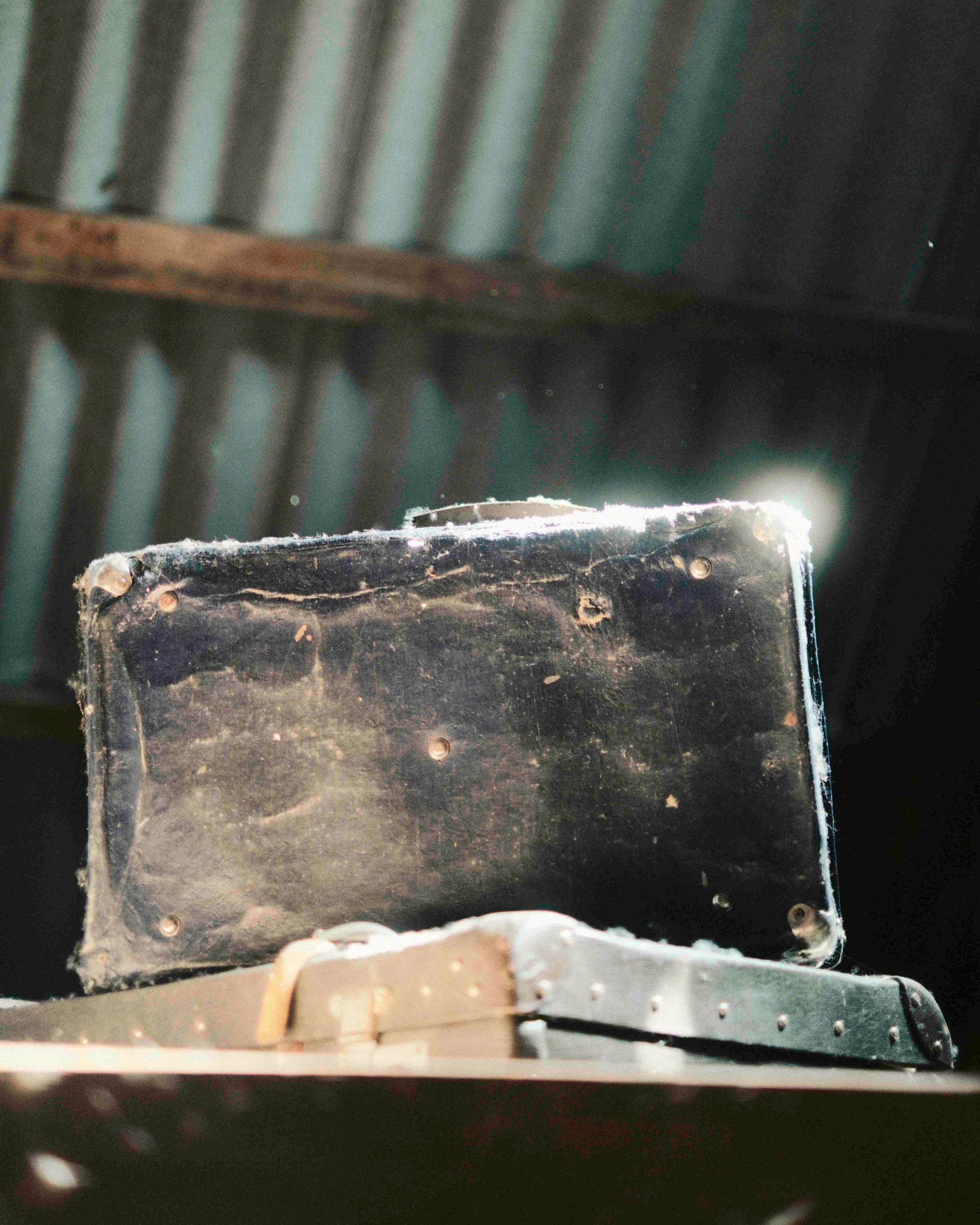
I remember 1956. I remember 1956 because I was young, growing fast and usually hungry. My youngest brother – a chubby, happy guy – had been born in February. Those were the days when pregnant women were put to sleep to give birth, and children weren’t allowed inside the hospital, except as patients. My dad held my hand as we stood in the thick snow outside the nursery window and a matron in a long-sleeved starched uniform held up the blue-swaddled bundle as if he was a ham on display. I remember that I wore a dark brown hand-me-down coat with a fake black Persian lamb collar. My rubber over-the-shoe boots zipped up from the toes halfway up my skinny calves. I remember that my fingers and toes always felt thick and stiff in winter, no matter how many pairs of hand-knitted mittens or socks I wore. We were living in an old farmhouse in Ontario Wine Country. My father – always the dreamer – had spied the ‘for sale’ advertisement in a weekend newspaper in Montreal, and had decided that if he couldn’t be a coffee farmer in Liberia (thank you, Mom, for saying no to that insanity), he could be a fruit farmer in the Niagara Peninsula. Back then, the Queen Elizabeth highway was more like a two-lane suburban road, but he set out after his machinist job on a Friday night, drove the old Studebaker half the night, walked the 16 acres and decided to buy it. Without consulting my mother, of course, because she undoubtedly would have said that the idea was madness. We left behind all of the family we’d ever had – uncles, aunts, cousins, and our community – to start over in rural Ontario. We were dirt poor but stone rich on that blighted piece of property. There was a house – barely. It was poorly insulated, with a leviathan furnace in the basement complete with a coal bin. Thin concrete floors over dirt. No running water – unless you’d call an indoor pump in the cellar, ‘running’. No indoor toilet, no central heating. An attic that turned into a sauna in the summer and grew icicles in the winter. My mother was a city girl, convent school educated. She didn’t have a driver’s licence and was stuck at the farmhouse with four children under twelve. I was the eldest, but oblivious as only a bookworm on the cusp of puberty could be. She died before I could gather the courage to ask her what it was really like back then, and push for her to tell me the unvarnished truth. With a family of six and no indoor plumbing, my mother was seldom still. Sometimes though, after school, when the baby was asleep, Mom would stop what she was doing for a moment and sit at the kitchen table with her hands in her lap, staring into the air. I’d ask what was wrong. She’d smile a tiny smile and wrap me in a mother-fragrant hug. Her hair was soft against my cheek. Mom would give me that special raised eyebrow. “I have something to show you,” she’d say, as if it were the first time ever. “Go wash your hands and face.” She’d flip up the kitchen curtain to make sure my younger brothers were within earshot and hadn’t impaled themselves on a farm implement. Then she’d turn off the stove and climb slowly up the narrow wooden stairs to the attic, wiping her fingers on her apron, her shoes squeaking on the rubber risers. The narrow stairway smelled of soup. She would stop about four steps from the top and wait for a minute, head bowed, her breath loud in the shadowy passage. Beside her right shoulder was a door sunk into the dark wood paneling. There was a small brass handle in the middle, with pointy edges like a small bird’s beak. She’d turn the handle, then fold the door back so that it wouldn’t bang. I’d push by to stand a step higher up so I could see inside. She’d stretch her arm in – it was as if her fingers had eyes – and she’d tug the rusty chain that dangled from the rafters. The lemony light would cast her smooth brown features into sharp shadows. Dust swirled around the bare bulb, disappearing deep into the shadowy attic and reappearing in the beams of light from random gaps in the shingles. Our breath fluttered the cobwebs like pale sails. I remember shivering, wondering if we were disturbing someone who hid there and who’d only come out when the door wasn’t open.
8 November 2025
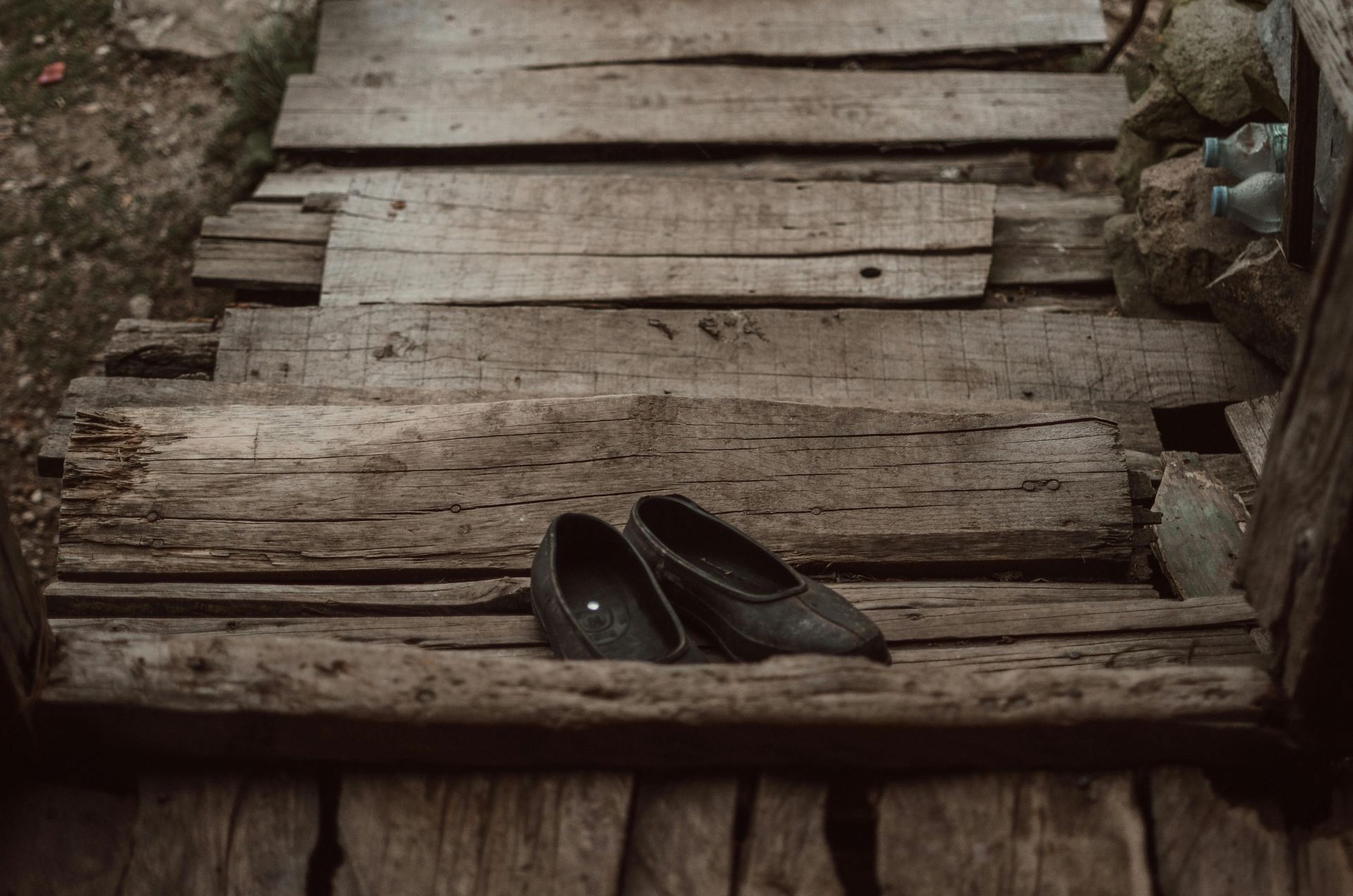
One hip pressed against the wall, her palm warm on my shoulder to steady herself, she’d ease out a square leather case with silver fittings glittering at the corners. It had one of those swing-down catches with a little crooked tooth. The tooth snugged into a metal loop on the front. We’d sit down on the stairs, knees touching, the box between us. She’d nod and gesture ‘go ahead’ with two fingers. I’d wipe my hands on the lap of my brick-patterned skirt then gently brush time’s dust off the top with the hem of my blouse, swing up the silver hook and lift the lid. She’d usually turn away for a while to stare over my head at something I couldn’t see. I’d guessed perhaps she was seeing ghosts, but when I looked up the stairs, there was nothing there. “My mother was a dainty woman,” Mom would say softly, wiping her eyes with the corner of her apron, not looking at me. Somehow, my self-absorbed self understood that I should be reverent, that I shouldn’t rush. So we’d sit in the dusty quiet and stare into the shadows of the box, waiting. I shivered when I touched the flimsy wrappings, held loosely with thin faded ribbons or plain parcel string, knowing they held her memories. The rustling papers stirred up a confusion of scent – lavender, lemon, rose and then leather. I lifted out the treasures, one by one. A thin Blessed Virgin Mary cradling baby Jesus between her ivory arms. Packs of brittle greeting cards with stained edges, red-striped airmail letters cramped with Dad’s blue-black writing, over-stamped with ‘Allied Forces Overseas’. A carved wooden Sphinx the size of my hand, branded ‘made in Egypt’. Three faded roses bound with lace to a slim silvery wrist-band. A dark brown baby shoe worn down at the heels. I picked up a photograph tucked against a corner. The date in the pinked margin read February 1938. The camera had caught her dark oval face and her unblinking gaze under a solemn brow. Grandmother’s thick wavy hair was pinned up under a fancy hat. Her fingers gripped the back of a velvet chair. Less than 12 months later, she would sit in a dentist’s chair for a wisdom tooth extraction and not awaken from the anesthetic. My mother was 19 years old, guardian three young siblings to keep safe from the social service authorities who wanted them sent to an orphanage. She bore the weight of that death all of her life. I know that now. In comparison, the box that lay in my damp hands was feather-light. I’d peel back the layers of tissue and there they were – my grandmother’s shoes. They were tiny – size 4, I think – black, with 18 shiny leather buttons marching from the arch to the ankle. They were creased but hardly worn, just enough to give off that comforting used smell. The heels were the width of three of my fingers, about two inches high. I traced the seams and fancy threading along the tongues. I gleaned the cobbler’s name on the instep with my fingers, as if the words were Braille: Savage Shoes. There was no question of me putting them on. At age eleven I was almost as tall as my mother. Already my feet were bigger than hers. Mom would sometimes pick up a packet of letters and fan through them like they were leaves, only with writing. I remember asking her what they were. She’d said, “Your father wrote such beautiful poetry to me when we first met,” with a sad profundity even I could comprehend. And I would look from her beautiful chapped hands that were almost never still, to the mute epistles in her lap, wishing I could know what she was thinking, what she was wishing. My eyes would feel hot and full and my ears would throb. We would rest there on the steps until my brothers banged through the screen door or the milkman came or the telephone rang – two long, two short. Too short. Then she would motion for me to put everything away. She’d push the box back into the shadows, snap off the light and close the door with a sigh. I would sigh too, my skinny shoulders rising and falling in time with hers. Leaning against the step, she would fold me to her chest, the sweet powdery smell of her body filling my nose, displacing the scent of our pasts. Back then I thought it odd that she never wanted to hold my Grandmother’s ‘good’ shoes. But when my mother died too soon, I began to understand the power of possessions so personal. Even today, when I venture to our storeroom to go through the things that I’ve stored since her passing, they hold a resonance that brings back that pulsing throb, the thickness in my throat, the tremor of longing in my fingers. Oh, Mom. I tuck them back into their boxes and seal the lids with fresh tape. Perhaps next year I’ll try again.
5 November 2025
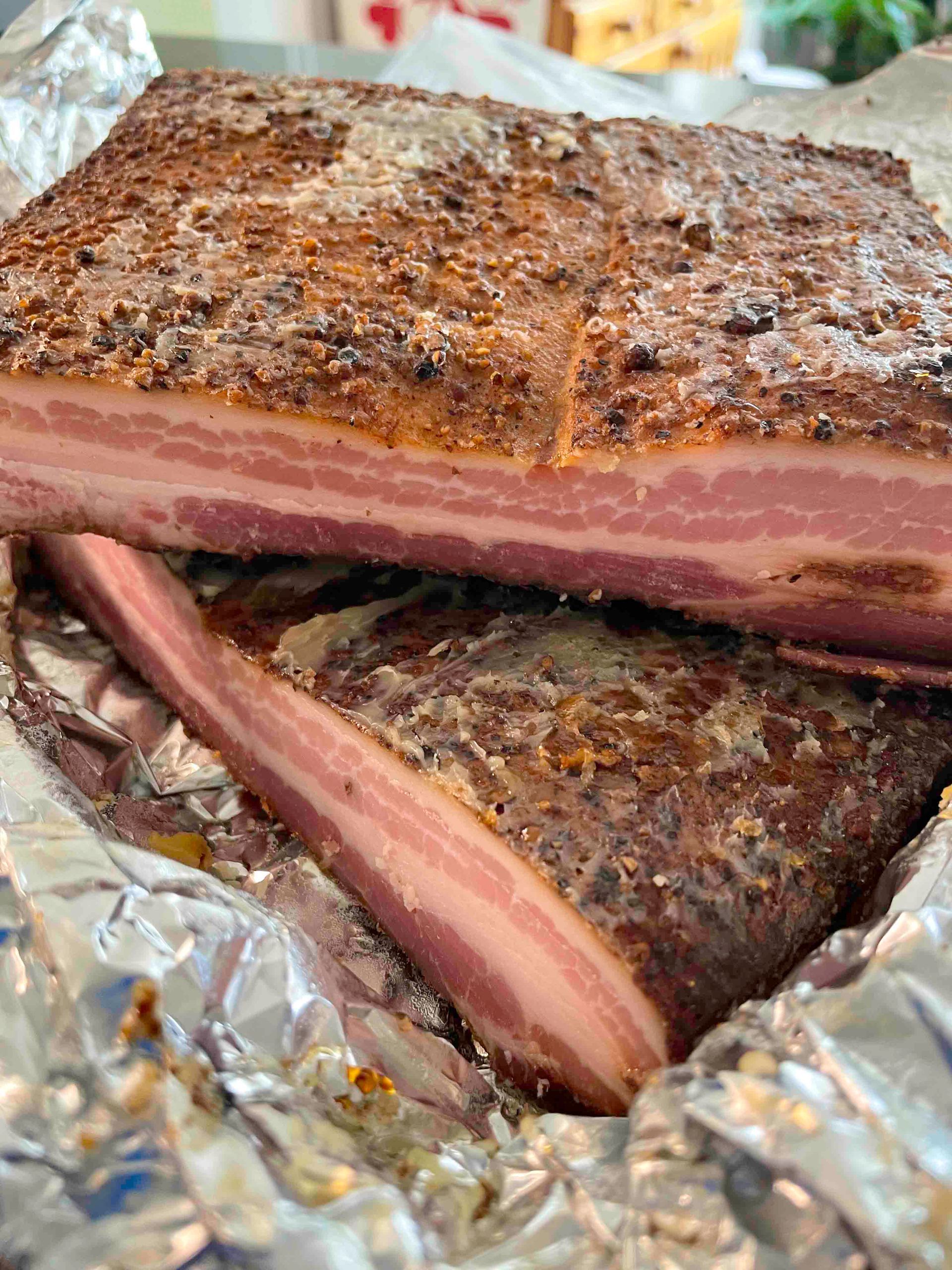
I love bacon. Not the pale, store-bought, watery then brittle-when-cooked nitrate stuffed strips, but the old-fashioned kind that smells like meat when you fry it in a pan and that lingers in your mouth, with a subtle, sensual pork taste. Sure, you can get it at the larger farmers’ markets, but who wants to drive for half an hour and queue for 15 minutes to buy half a kilo of tasty smoked goodness? BB&F surprised me with a bonus at the end of my first year of employment. Instead of setting it aside for a rainy day, I decided to take my friend Maggie’s advice and buy something for myself to a Kamado Joe Classic III charcoal grill with all the accessories. Their tagline is: “A Kamado Isn't Just A Grill. It’s A Lifestyle.” Of course, I jumped in with both feet. Why bother with something as prosaic as grilled chicken when I could go big? I ventured online to sites like Amazingribs.com and Reddit and watched countless Smoking Dad BBQ YouTube videos. I read the spirited discussions about the merits of home-curing and different varieties of charcoal. I read countless blogs penned by adventurous women and men who were curing their own meats and making sausage. Yowza. And who is the inspiration for all this innovative grinding of meats into chilled bowls? I confess that I’m wild about Michael Ruhlman. Not MR himself, but his approach to food preparation. I learned that the guru of goodness is a man from New York, who graduated from Duke University with a degree in literature. He’s a prolific author, but that’s not why I’d do his laundry. How can you not admire someone who said: “he best things in life happen when you get carried away.” After drooling over the blogs regaling us with Charcutepalooza tales, I decided to buy his book, Charcuterie . I sourced a pork belly from Vinces’ Market in Sharon. The thing weighed almost 7 kilos and came complete with a thick skin that took me a while to surgically remove while not slicing off my fingers in the process. The tiny nipples on the belly were a bit of a turnoff, but I persevered. I divided the belly into three chunks, that fit easily into large Ziploc bags. Post-cure, the bellies were firm and well streaked with fat, but what was best of all were the thick layers of meat in between. I used a mixture of Insta-Cure, brown sugar, salt and fresh-toasted ground red/black/white peppers, cardamom and juniper berries. I double-bagged everything and tucked them onto a shelf in the downstairs fridge, weighed down by a case of pink grapefruit cups for 8 days. I turned the packages every day and watched the meat transforming from soft and flabby to firm and muscular-looking. Sounds like a workout regimen! Cold smoked for 8 hours over pecan wood and – wow. The only issue for me is getting the slices thin enough. I splurged on a slicer so now I’m cranking out gourmet bacon slices. The Food Network lists 50 ways to add bacon to recipes – here’s the link . Bacon guacamole, maple bacon donuts, bacon ice cream, bacon popcorn, chocolate dipped bacon, bacon wrapped dates, bacon wrapped tater tots, dips and bread – oh goodness, I’m in love. Then again, I’ve been surfing for salted caramel and chocolate recipes. Dieting be damned. The flavour punch of salty sweet, meaty, crunchy would be amazing.

3 November 2025
Before they invented big-screen televisions and botulism was something you never wanted to find in your food, never mind inject into your wrinkles, Mondays were washdays. In the damp concrete-floored, low-ceilinged cave that was our basement, my mother had an Easy brand wringer washing machine with an agitator the size of an outboard boat motor. The machine’s electrical cord was the size of my ten-year-old wrist and when you plugged it in, the whole contraption made the most wonderfully frightening grinding roar as it mashed up the dirty clothes into a sudsy pudding. As the eldest, I got to feed the corners of the bed sheets into the finger-mangling rollers of the wringer, every shove forward an audacious flirt with danger. Would it be painful if my hand got dragged in? I can vouch for the relentless undertow of the spinning rubber cylinders, but they actually didn’t hurt that much. Once the soiled water had been squished from the load, they were dropped into a huge tub filled either with a dilute blend of Reckitt’s fabric blue or bunch of herbs like lavender (remember, this was way before bottled fabric softener). It was time to empty the tub and refill it with clean water. Since we had no indoor plumbing, that meant a couple of trips to the pump in the corner of the cellar to fill up the galvanized tin pail. We were eco-friendly before it because the in-thing to do – we always washed in cold water! I’m not sure of the formulation of the Sunlight soap bars we used to scrub stains, but they were strong enough to strip off the epidermis if you left your hands un-rinsed for long. The scent of sun-dried laundry was glorious. Winters, though, were a chore. Baskets of damp clothing had to be manhandled to the back porch and hung quickly on the plastic-coated line before fingers grew stiff with cold. At the end of the day, everything was frozen into cardboard cutouts of their thawed shapes, sharp enough to wound the unwary. Of course they couldn’t be folded. Instead, we took turns wrestling them into the house. Sometimes, depending on how cool and dry it was inside, they’d hang for days on lines of cord criss-crossed under the basement ceiling.

2 November 2025
The 15 meter sailboat (small by Greek standards) tugs quietly on the rope lines, rocking slowly against fat bumpers on the jetty. Its hull gleams brilliant white under an early Sunday sky cobalt blue as only a Greek sky can be blue. There’s no clinking or creaking – everything is tied fast, lines taut, the thick stainless steel mast barely swaying, the navy foresail snugged tight in its wrapper. Out of the shadows behind the cabin, a man’s voice murmurs something in American-accented French as a thin dark-haired woman wearing tight navy shorts and a striped sailor’s t-shirt steps from the deck onto the concrete dock in Aghia Marina. She lands gracefully on her bare feet and laughs, seemingly for no reason. She scans the harbor and the dock, whistles, then bends forward at the waist, her hands behind her back. A low-slung black stray with pointed ears emerges from behind a wrecked rowboat and stops about three meters away with his nose in the air. The woman extends her right hand. The long nails on her fingers and toes flash crimson under the punishing sun. She’s holding some torn croissants and tosses morsels in his direction. He inhales them one after another. Each lands closer to where she stands. All the while, she’s smiling and mouthing sweet words in French, calling him pet and darling, inquiring about his health as she inches backwards towards the yacht. She hunkers down and reaches back with her left hand as she calls out softly to the man lounging on deck to pass her more food. Inducement , she said. Jack, as she called him, picks up a fat sausage from a plate on the table by his elbow, leans forward and presses it into her palm. Tearing the meat into pieces, she coaxes and teases until the animal is tonguing fragments from the concrete half a meter away. Hands empty again, she straightens and wipes the grease from her fingers onto the side of her calf, stroking her leg and calling out softly. The cur creeps forward on his belly, craning his wedge-shaped snout upwards, snaking out his broad pink tongue to lap at her flesh. The woman squeezes her eyes shut and clenches her fists, lips open to the sea breeze. When the licking stops she opens her eyes, reaches back her arm and snaps her fingers. The dog cringes at the sound but Jack moves slowly, this time handing her a piece of ham. She holds onto it and the dog nibbles around the borders of her nails. She begins to scratch behind his ears, talking as if to a child. “Do you want to come with me, Precious? Do you want to play?” He dips his chest onto his forepaws but doesn’t wag his tail. She scruffs her fingers through his fur. A crewman sticks his head out of the hatch and begins to climb onto the deck, whistling. Jack snaps a command and the man backs down the stairs. “Esme!” Jack’s whisper is harsh. The woman kneels down beside the dog now, her arm around his neck. “Quoi?” She speaks without turning her head, her carmine mouth close to the dog’s. “Stop screwing around with that mutt,” Jack says roughly in French, gesturing with the back of his hand. “He’s filthy.” “Pah. I can bathe him.” Esme hugs the dog around the neck, stroking his back and down his legs, but he angles his hindquarters away. Still speaking softly, she takes his face in her hands and draws his snout along her inner thigh, pressing her other leg against his side. The dog whines and pushes against her as she murmurs in French, then opens her legs and playfully pulls him in. He pushes too, tongue lolling. “Good boy. Good boy,” she says, stroking his chest. Jack calls out “Esme!” and presses a button beside the wheel. The sailboat’s motor turns over with a muted grumble. The crewman reappears and begins to untie the mainsail. “It’s time to go.” Esme has the dog on his back, tickling and stroking along his belly as he keens and curls under her hands, his paws clawing empty air. She stands abruptly and brushes her palms hard along the side seams of her shorts. “ Pas assez ,” she says aloud, backing away as the dog twists to his feet in a rush and dances in a confused circle around the dock, panting. Without taking her eyes from the dog, she reaches for Jack’s hand and he guides her onto the deck. Jack and the crewman work the lines free of the mooring and the boat draws away from the pier. Esme is on her knees by the railing, fastening the rope to its clips. That done, she stands and begins to wave her arms above her head from side to side calling, “Au revoir, mon petit. Au revoir .”

2 November 2025
The waiter at Bibi’s Brunch & Lunch was clad in regulation white shirt, black pants and Doc Martens. A spotless white cook’s apron was wrapped around a waist smaller than one of my thighs. The artfully messed hair and the wispy flavor-saver under his disapproving mouth had been bleached to a rusty blond. My guess was, he had a BA in Representational Art and was waiting for his first big break exhibiting cast iron fetish pieces at a local gallery. Alicia smiled as she pointed towards the front of the restaurant. He shook his head, no, but when we didn’t follow him to the spot he had picked for us by the open kitchen, he grudgingly came back and sat us at a table for six with a great view of the sidewalk action. “While we wait for our friend Julie to arrive, may we have some water?” Darla batted her eyes but it was a wasted effort. He sniffed, “Your server will be with you in a few moments” and huffed off. “Snobby little shit.” Patrice draped her faux-pashmina over one of the empty chairs. While we waited, we critiqued the comings and goings of the beautiful people, the people who thought they were beautiful and the downright scary as they paraded by on Queen Street. There’s something about being on the inside looking through a double-glazed window that lends a special sharpness to being bitchy after Sunday mass. A squadron of fashionably attired smokers puffed in the noon glare on the outdoor patio, lounging at dinner plate sized plastic tables, unencumbered by umbrellas, sunscreen or too much common sense. “Ladies!” He looked just like that Rodriguez character from Queer Eye for the Straight Guy, but with styled chest hair and lots more makeup. An excess of silver jewellery made music when he moved, which was almost constantly. His name tag said Alain. Darla kicked my ankle. I kicked her back. “I’m Alain.” He pronounced it ‘Ellen’ which, if his MAC Moody Blue manicure was any indication, had a loud ring of truth. “How may I serve you lovely women today?” Patrice snickered at his offer of service, her mind on other things. Alicia tapped the chunky silver bracelets on his right wrist. “Alain.” She pronounced it the way he did, but in her deep, mistress-is-speaking voice. “Darling boy.” He leaned over, gazing into her eyes. “Could you please bring us something soothing, with lots of liquor and a blush of pomegranate juice?” He arched one hip and both eyebrows, grinning widely, with his palm pressed against his chin. “Why, of course, Madame!” “And we’ll have the quiche of the day with salad,” I added, looking at my brunch buddies for confirmation. They all nodded. Bibi’s was notorious for negligence. Rumour had it some waiters slipped off to auditions or sewed up dance costumes after dropping customer ‘requests’ for food off at the service counter (orders were not permitted). If Cook was in a funk, you were liable to get grilled sheep liver and sweet potato poutine frites, even if you had asked for a poached egg with vegan hollandaise on whole wheat brioche. “And some bread,” Darla added. “The hell with Dr. Atkins! I’m starving for something warm enough to melt butter into.” “I hear you, Girlfriend!” Alain rolled his eyes, pressed a shapely index finger against her shoulder and swanned off. He returned right away with a heaping basket of assorted fresh breads and four small pots of flavoured butters. After a minute, he was back with a quartet of tall sunset-coloured drinks onto the table. Ah, booze and bread. Once the brain freeze wore off the hit of pungent gin and sweet fruit juice warmed the tongue. We sipped and chewed for a while, easing away the day-after Saturday-night edge. “How was your workshop yesterday?” Julie – our missing companion – had badgered me into joining her at the library for a lecture on Animal Symbolism in Whitman’s Poetry, given by a local literary guru who’d twice been published in the Globe and Mail. Now old Walt was one of my favorite poets, so as much as I loathed fusty almost-famous don’t-move-your-lips literary poseurs, I went. “Bruce Worthington-Finney was eminently forgettable,” I said. “Although he did present an interesting analysis of wolf imagery and the relationship between the physical and the spiritual in Song of Myself. He had a thing for words like ‘hard’ and ‘climax’ and ‘ultimately coming’.” Patrice snickered – she had a low booze threshold and I think she was on her way to being loaded. “There were about twenty people there, mainly older women in funky outfits, a few earnest college kids and a hairy newspaper reporter named Elise. But let me tell you about the librarian.” Alain dropped off another round of drinks and more bread, giving us the ‘it’ll be a while’ head shake and sham smile. “Her name is Lola. Not a bad looking woman. Great hair – shiny brown, good cut. Not enough makeup. About five foot ten – but she’s a size twenty and she was wearing a size sixteen blue flowered outfit with a long red scarf and comfortable brown shoes.” I took a big sip of water. “I think she’s in love with Bruce.” “What?” Darla handed me a piece of rosemary cornbread. “How could you tell?” “She simpered.” “No!” “Yes! Bruce is about five foot eight and he was wearing a cravat, for God’s sake, and a brown tweed jacket with suede patches on the elbows. And black leather pants – I haven’t seen those on a sixty year old man since university! Lola stood real close to him while she read his introduction and made some suckhole comments about his genius and his craft. But it was so yearning, so heartfelt — I felt like suggesting she get them a room. And he lapped it up like it was his due and he rested his hand on her shoulder. Jesus, he bites his nails to the quick – what does that tell you? Anyway, when she was finished he gave her one of those tipped-head, crinkly-eyed little liar smiles.” I shivered. “I swear she was glowing. Her face was sort of hidden behind the wings of her page-boy but she had that smile, like she was thinking of some hidden meaning in his talk about ‘wet glistening beards’ and ‘bay mares’ and ‘voluptuous nights’. “Wasn’t Walt Whitman gay?” Just then, Alain bustled up with his steel service tray. “Did you say Walt Whitman? My hero? He was queer as a three dollar bill and his wife had a beard!” He laughed a dirty laugh and, with a flourish, arranged our cutlery and plates of pretty food on the table. “There! All set.” It seems Cook didn’t have PMS or man-o-pause today. Just as we started to eat, Julie tapped up to our table in her too-high Winners’ Sunday-best shoes and slipped into the empty chair beside Darla. We did the smiley, hand-touching, happy eyebrow-raising thing because no one wanted to get up and do the cheek-kiss thing and risk getting stray bits of clothing into our food. Alain appeared immediately. “I’ll be right back with yours,” he said, making it sound suggestive. That was a scary thought – four middle-aged hetero women and a gay waiter with nicer nails than ours. I continued with my story. “She brought him a bottle of water during the break and some sliced oranges and asked him if he’d like a warm muffin.” “Warm muff…in,” Julie snorted. “Right.”

29 October 2025
Before they invented big-screen televisions and botulism was something you never wanted to find in your food, never mind inject into your wrinkles, Mondays were washdays. In the damp concrete-floored, low-ceilinged cave that was our basement, my mother had an Easy brand wringer washing machine with an agitator the size of an outboard boat motor. The machine’s electrical cord was the size of my ten-year-old wrist and when you plugged it in, the whole contraption made the most wonderfully frightening grinding roar as it mashed up the dirty clothes into a sudsy pudding. As the eldest, I got to feed the corners of the bed sheets into the finger-mangling rollers of the wringer, every shove forward an audacious flirt with danger. Would it be painful if my hand got dragged in? I can vouch for the relentless undertow of the spinning rubber cylinders, but they actually didn’t hurt that much. Once the soiled water had been squished from the load, they were dropped into a huge tub filled either with a dilute blend of Reckitt’s fabric blue or bunch of herbs like lavender (remember, this was way before bottled fabric softener). It was time to empty the tub and refill it with clean water. Since we had no indoor plumbing, that meant a couple of trips to the pump in the corner to fill up the galvanized tin pail. We were eco-friendly before it because the in-thing to do – we always washed in cold water! I’m not sure of the formulation of the Sunlight soap bars we used to scrub stains, but they were strong enough to strip off the epidermis if you left your hands un-rinsed for long. As I sit under the pergola on the deck, out of the afternoon sun, the air is filled not with birdsong, but with layers of annoying buzz from multiple lawn tractors and gas trimmers. Tomorrow morning around 7 a.m., the landscape crew that keeps the vacant lot across the street trimmed will be out doing manuevers with a squadron of those zero-turn machines that jolt me out of a sound sleep. At least the folks driving them wear ear protection. Maybe that’s the only way I can get another hour of sleep.

29 October 2025
On a rainy Friday evening the following June, Anthony announced he was going away for a few days. “Don’t worry. I’ll be back with a surprise. I promise.” He returned on Sunday evening flourishing a thick Manila envelope, travel-weary but jubilant. He kissed his wife on the cheek, not something he usually did outside their bedroom. “Here.” Beatrice wiped her hands on her apron, relocated the cat from her chair to the floor, then sat and peered at the pages filled with legal jargon and map coordinates. Anthony shoved a photo into her hand. Indeed, he’d been too modest. The ‘surprise’ was cataclysmic. At least this time, the house was already built. Red insulbrick again, but it looked sturdy, with two storeys covered by a shingled barn roof. Windows on each side of a door with no stairs looked like empty eyes. There were apple trees in the front yard. A tractor was parked on the gravel driveway. “Sixteen acres of orchards. Sour cherries, peaches, pears. Grape vines. A cistern. All the farm equipment. Our own creek.” His brown eyes crinkled with delight. ‘Our’. Beatrice hadn’t seen him so happy in years. He kept saying, ‘our’. She knew she should try to share his joy, but with every word he spoke, her heart shriveled. Glancing at the picture again, she said, “Where?” Nothing changed. Except that everything had changed. He unfolded a worn map. Province of Ontario. He jabbed his finger beneath a speck of letters: Beamsville. “Our future. It will be good.” That was a lie. *** Beatrice gazed at the relentless green of forest and fields, wondering at the resolve of this man beside her who was more of a stranger to her than before. She shivered. Every place she’d ever known, everyone she’d loved except for her children, was out of reach. Even the cat had run off before the last box of books was packed in the Studebaker’s trunk. Anthony wheeled the car from a tarred country road past a battered aluminum mailbox on a post by the ditch and up a narrow lane to their new home. Six months before, he’d read an advertisement offering ‘productive farmland for sale’. He’d driven eight hours each way from Montreal—four hundred miles—to buy his dream with the last of their savings. During the intervening months, he’d been so sweet. Tried out intermittent little gestures, as if he’d been practicing. Promised to teach her to drive. Told her they wouldn’t be pinching pennies forever. She’d wept in private, begged her friends to come visit, and stopped going to Mass. Why bother? God had forsaken her. They’d arrived in rural nowhere as night was falling, exhausted and numb. They had groceries to tide them over for a few days and as many personal goods as they could cram in. While the children slept in the back seat, Anthony grabbed Beatrice’s hand and tugged her up the six worn planks at the side entrance. She looked askance at the sagging clothes line attached to the wall and the path leading to a narrow shed at the edge of the orchard. The entrance door opened with a shriek. Inside smelled of old dog and stale heat. Their footfalls echoed on the red and yellow linoleum. There was no other sound but the buzz of flies trapped between the screen and panes of glass in the double windows. He flicked the light switch. “Guess they forgot to turn on the power,” he said, taking a flashlight from his pocket. She slid her hand from his and fingered a gingham curtain the colour of old blood. They toured the house. It was so much less than Beatrice had hoped, but just about what she’d come to expect. There was a green Formica table and four chairs in the kitchen, an electric stove and refrigerator. But instead of a faucet and taps by the cast iron sink, there was a hand pump. She blinked back tears as she climbed a flight of wooden stairs to the bedrooms. When she looked up at the uninsulated ceiling, she saw slivers of moon through the wooden slats. “I’ll go get the children,” she said, and trudged into the blur of her future. *** The day school started, sun blazed in the autumn sky. Beatrice’s morning sickness was over. She’d learned how to operate the wringer washer in the dirt-floored cellar without mangling her arms. And in the heat of summer, hanging load upon load of damp laundry hadn’t been so bad. ‘For richer, for poorer, in sickness and in health’. Weary of housework and picking rocks from the cherry orchard, she decided to repaint their name on the mailbox. The red flag was up; fresh mail. Tucking the paintbrush into her hair and the bottle of India ink into the crook of her elbow, Beatrice flipped open the box and pulled out some utility bills, a postcard from her just-married sister in New York and a blue airmail envelope. Curious, she flipped it over. The return address was Mosely, Birmingham, England, written in a school-marmish hand. A woman’s hand. A black cat had been drawn across the envelope flap. Underneath the tail was printed a tiny number XXVI. She’d seen that handwriting before. Years before, actually, when she’d been searching in a desk drawer for their cheque book. A stack of crisp envelopes secured with a rubber band. Underneath a studio portrait of a curly-haired blond cuddling a little dog under her chin. Beatrice gasped. The bottle of ink tumbled down her side, leaving a wet gash of black along her flowered house dress and staining the outside of her calf. Her gaze shifted to the patch of devil’s paintbrush growing in the culvert at her feet as she sifted through her memory. That had been months after she’d refused to move the family to Liberia. She kicked the empty bottle into the ditch, raced back to the house and turned the heat on under the kettle, praying that Anthony’s correspondent had used permanent ink. “Dearest Tony,” she read. He’d always insisted she call him Anthony. “Thank you for the pretty hankies. Mam and Sis appreciated the thoughtful gifts. I bought a lovely new blouse with the five pounds you sent. Eddie and the blokes from the pub were asking after you. The printing plant and metalworks factory are running adverts in the paper for maintenance men. They’re giving preferences to vets still, so think about that. Our Alice and I went dancing at the Palais last weekend. It’s not the same without you, though.” Beatrice clutched her belly and sank into a chair. She couldn’t remember the last time she’d worn something lovely and new. Tears ran down her cheeks. No, she did remember. Her wedding day. ‘Forsaking all others.’ She’d never had an ‘other’ to forsake. It was the shouts of the children in the yard that brought her out of her stupor. Leaping to her feet, she scrubbed the ink from her skin with a dishrag then grabbed a bottle of mucilage, pressed a thin line of adhesive to the letter flap and pressed it shut with the flat of her wedding band. She made a bundle of the fresh mail and some opened envelopes, crumpling it between her fingers before tossing everything down and dragging it across the tiles with the toe of her shoe. She picked the papers from the floor and organized them into a tidy pile. If Anthony asked what happened, she’d make something up. She’d dropped them in the yard and had to grab them before the wind blew everything away. But he didn’t ask. Beatrice stopped keeping track of the numbered letters. The children were always hungry. As darkness came earlier and earlier, being housebound made them even more rambunctious. Except for the walleyed egg man and the milkman who still drove a horse and buggy, she had no visitors. The Ukrainian and Polish farmers’ wives in the vicinity had twice as many children. Even if they’d understood English, there was no time or energy for socializing. Never-ending mending. Air leaked through chinks in the walls and shovels of coal had to be fed into the furnace around the clock. Anthony worked overtime, read three books a week and wrote poetry and letters every day. The nightmares returned; he’d escape to sleep on the couch. Conversation was infrequent, but the children’s chatter and his melancholy filled the spaces where marital congeniality had been. On New Year’s Day, she slipped carrying a pail from the indoor privy to the outhouse. He found her on the ground half an hour later, big belly-up, spattered with frozen shit, tears pooled beneath her shuttered eyes like icy commas. Their last child was delivered in hospital, in the midst of a blizzard. Beatrice was glad for the week of enforced rest. The cards from her family and the tug of that sweet fat boy at her breast reminded her of love. She’d been faithful. The Lord would provide. She pressed the heads of the flowers her husband brought her between the pages of her Sunday Missal and got on with it. Anthony never got around to teaching his wife to drive. It was lonely for her on the farm. That was one of the reasons he gave when, during Easter dinner two years later, he announced he was selling the farm. They were moving into an apartment above the pharmacy in town. The children balked at leaving school and friends and the freedom of roaming the countryside. Their father sent them to their rooms without dessert. Beatrice looked forward to starting afresh with hot and cold running water, flush toilets and steam heat. No more pre-teen daughter driving the tractor while Anthony wielded the sprayer of poison. No more packing fruit in frilly purple cups for hours on end, itching from the fuzz and getting stung by wasps. No more bathing last in a tin tub of lukewarm soap-scummed water. For a time, the family rubbed along in the small apartment, lulled by town comforts like a laundromat, a public library, parks and sweets from the Italian bakery. Anthony got a second job; Beatrice joined the Catholic Women’s League, won accolades for her beautifully decorated cakes and knit socks for prisoners of war in Korea. He bought a newer used car and more books. She got a sewing machine. The ties that should have bound them frayed, but she had no experience with couple-hood and feared whatever she did or said would be wrong. He didn’t beat her or booze it up. There was no knock-down, drag-out fighting in front of the children. Even so, his tormented rage soured their smiles. Still, they’d manage. And they did, until she discovered the dark suitcase—half-packed with his things—under their bed. He’d hung his head and paced the room like it was a cage. She wrung her hands and begged him to think of the children. “It’s all too much,” he’d moaned, waving his arms. “The noise, the demands. I can’t take it.” Dry-eyed, she closed the door and leaned against the jamb. “What will we do?” “I have a bus ticket. For the day after tomorrow. Don’t worry, it will just be for a while.” ‘Until death do us part’? Their story ended with a lie, too. Hyacinthe Miller - 1st prize, OBOA Writing Contest - 2018

28 October 2025
This story begins with a lie. In Latin, mostly. With a bit of English and some franglais thrown in for the pew-fillers seeking refuge from the frigid bluster of a Montreal winter. On January 19th, 1946, a pair of twenty-five-year-old orphans slipped into the vestibule of St. Anthony's Parish church on rue Saint-Antoine. They stamped snow from their feet, hung their heavy coats in the cloakroom then milled about in the incense-scented dimness. She wore white, of course. White pumps and silk stockings gifted from her Girl Guide troupe, a simple lace gown that cost a month's wages and a filmy chapel veil tatted by Ma Wheattle, president of the Catholic Women's League. Rail-thin, her work-chapped fingers scented and gloved, the bride clutched a posy of pale flowers and recited a silent prayer to her Guardian Angel. Clad in a natty, double-breasted suit, her silent companion adjusted his trouser creases and stared straight ahead. The altar boys elbowed each other as they lit candles in the sanctuary. With a frowning shush, the elderly priest motioned to the groom. Spine soldier-straight, he strode to the altar rail. In the choir loft, the organ wheezed to life. An old family friend, an honorary uncle, proudly stood in for the bride's long-dead parents. He hushed her three younger siblings, waved them toward their pews, then solemnly walked the bride up the long stone aisle to give her away. Ah yes, the sacrament of holy matrimony. The "covenant by which a man and a woman establish between themselves a partnership of the whole of life and which is ordered by its nature to the good of the spouses and the procreation and education of offspring". In which man and woman were intended to cleave one to the other for a lifetime. Beatrice pledged to ‘forsake all others’, to be faithful and bear his children. She stared at his handsome face and with a tremulous smile, murmured, “I give you my all.” She meant it. Those monthly novenas to Saint Joseph, the lonely prayers to St. Raphael, the scores of candles lit during those years scarred by grief and the Great Depression had been worth each hard-earned coin and calloused knee. Beatrice had kept her small family together since the age of nineteen. While she worked three jobs, the ‘uncles’ and ‘aunties’ of the Negro Community Centre fended off inquisitive social workers with orphanages on their agenda. She’d smile as she asked the butcher for ‘bones for the dog’ they did not have, then carefully eke soup or hash or a pot pie from the meat scraps. When the cupboards were nearly bare, the children were fed first; she was sustained by the rightness of what she was doing. And now she was getting married. In the house of her God. No matter that they hardly knew one another. They’d been brought together for a reason. Her faith had seen her through so far. Would see her through. No matter what, she believed. Holding her hand in his calloused palm, Anthony took a deep breath then repeated Beatrice’s words. He slipped a gold circlet on her finger and said, without meeting his bride’s hopeful gaze, “I take thee for my lawful wife, to have and to hold from this day forward, for better, for worse, for richer, for poorer, in sickness and in health, until death do us part.” If only. If only we could hit 'rewind'. He lied. He had no all to give. His vow was broken as the phrase left his lips. The lie was one of omission, but mendacious nevertheless. Beneath that tailored navy blue wool, the crisp white shirt and spit-shined brogues, Anthony was a ghost with a captivating smile. He had form. He had substance, too; just not enough. What kind of person could he have been if his father’s legs hadn’t been cut off by a cane-hauling train in Cuba? If he hadn't languished in a hard chair for three days at his sickly mother’s bedside, not leaving except to urinate behind their neat wooden house? Three days—forever for a ten-year-old boy—spent stroking her arm and begging her to awaken. But she’d already given up and died. What if he hadn't been fostered by relatives who treated him like a human donkey? They’d threatened that sensitive, love-starved boy with the Bible and tried to thrash his artistry away. When they caught him reading the Classics, they starved him of food. Would there have been more of him to share if he hadn't lied about his age and joined the Corps of Royal Engineers as a sapper? He’d trained in Chatham, Kent in England, where he wrote poetry on the backs of old envelopes. A curly-haired Land Girl in mufti taught him to dance. He learned that Satan didn’t care about him. And in the shadow of the Sphinx, what remained of his youth was blighted with sand flies and spattered with the blood of his falling comrades. Who knew that only most of him would return from overseas to be demobbed in Montreal? Those two orphans were so hopeful. They tried. Dear God, how they tried. A scant nine months after the wedding, their daughter was born. Anthony had taken ship from Southampton, England, two weeks before. He had a trade and found work as a machinist. Master of his own house, he overflowed their bookshelves with leather Reader's Digest volumes. Beatrice, a proud young matron, kept house in the old family apartment on St. James Street. Out of habit, she ‘made do’, using every part of a chicken except the squawk. She sewed and knit for the children and taught herself to make preserves to keep the larder filled. They hosted potluck parties. Family and friends, music and food, debates and laughter. Three years later, a son arrived. Another boy—one whose background was shaded with mystery—was ‘adopted’. There were five around the table. For a time, it seemed like equilibrium had been restored. Then Anthony bought a plot of land on the South Shore. Located in the middle of an empty field, the settlement of Mackayville would eventually grow into a suburb populated by rough-and-tumble labourers who favoured driveway auto repair and large dogs. He drafted plans for a modest wood-framed house with a concrete block foundation, red Insulbrick siding and asbestos roof shingles. Most weekends, he slept in a tent with his tools beside piles of two-by-fours. His buddies from work or from the nearby Caughnawaga Reserve would drop by to help. Even though he was more of a handyman than a builder, he couldn’t abide the sloppiness of well-meaning helpers fueled by Carling Black Label beer. When the house was ‘finished’, it resembled a sharecropper’s cottage more than anything else. There was a well in the back and a hand pump in the kitchen. An ice box sat in the lean-to pantry. Meals were prepared on a wood-burning cast iron cook stove. It was months before the electricity worked reliably. The place was drafty and the oil furnace smoked. Nothing but weeds grew in the yard: they were literally dirt poor. Something always wanted fixing or they needed another cord of wood. Everything was more expensive. In 1953, with three youngsters underfoot, Beatrice was a pioneer wife not thirty miles from her network of family and friends and the largest city in Canada. She adjusted. Hadn’t she said, ‘for better or worse’? Being taunted for being coloured cut deep. The loneliness she kept at bay by keeping busy. Eighteen months’ later, ‘better’ returned. Her husband grew tired of commuting over the Jacques Cartier bridge, sold the do-it-yourselfer and moved them into a bright walk-up on Lusignan Street. Beatrice was back in her element. They had modern conveniences. No one called them names. The children were healthy and exuberant. Life became more stable year-by-year, but Anthony chafed. He’d never known a ‘normal’ that lasted so long. He swept into the apartment after work one Saturday afternoon in 1954 and handed his wife a box of Cadbury’s Assorted Milk Chocolates. “Thank you. But why?” It wasn’t her birthday or their anniversary. And Anthony wasn’t a spontaneous man. With a shy smile, he announced that he wanted to start a coffee plantation. Or perhaps harvest rubber. The whole family could work their acreage. Where? The Republic of Liberia. “Liberia? In Africa?” Beatrice said. “Yes. The Motherland. Think of the opportunity. We’d be among our own people.” She glanced around their neat apartment, at their children colouring at the kitchen table. At the handful of spring flowers in a jar by the new RCA Victor radio. She bowed her head for a moment then looked at the earnest face of her husband of seven years. “We’d die there, so far away from everyone. From my family. Our people are here. No.” He stared into her eyes then said, “I’m going to write some letters,” and left the room. Beatrice was a good wife. She asked no questions. He talked about re-enlisting to fight in the Korean War. She reminded him of his family obligations. He buried himself in his papers. The familiar rhythms of life resumed. A few months later, the first of the pale blue aerogramme envelopes arrived.